How Does a Motorbike Work? A Comprehensive Guide to Motorcycle Mechanics
Of course. Here is the comprehensive article you requested.
Table of Contents
- How Does a Motorbike Work? Decoding the Engineering Behind Two Wheels
- Introduction: The Symphony of Speed and Control
- The Heart of the Beast: The Engine
- Internal Combustion Explained (The Four-Stroke Cycle)
- Key Engine Components
- Fueling the Fire: Air and Fuel Delivery
- From Tank to Combustion Chamber
- The Spark of Life: Ignition System
- Creating the Spark
- Putting Power to the Ground: The Drivetrain
- The Clutch: Engaging and Disengaging Power
- The Transmission (Gearbox): Matching Speed and Torque
- The Final Drive: From Gearbox to Wheel
- Controlling the Ride: Steering, Braking, and Suspension
- Steering: Guiding Your Path
- Braking: Bringing it to a Stop
- Suspension: Comfort, Grip, and Handling
- Essential Supporting Systems
- Exhaust System
- Cooling System
- Electrical System
- From Rider Input to Roaring Motion: A Step-by-Step Overview
- Conclusion: The Integrated Machine
How Does a Motorbike Work? Decoding the Engineering Behind Two Wheels
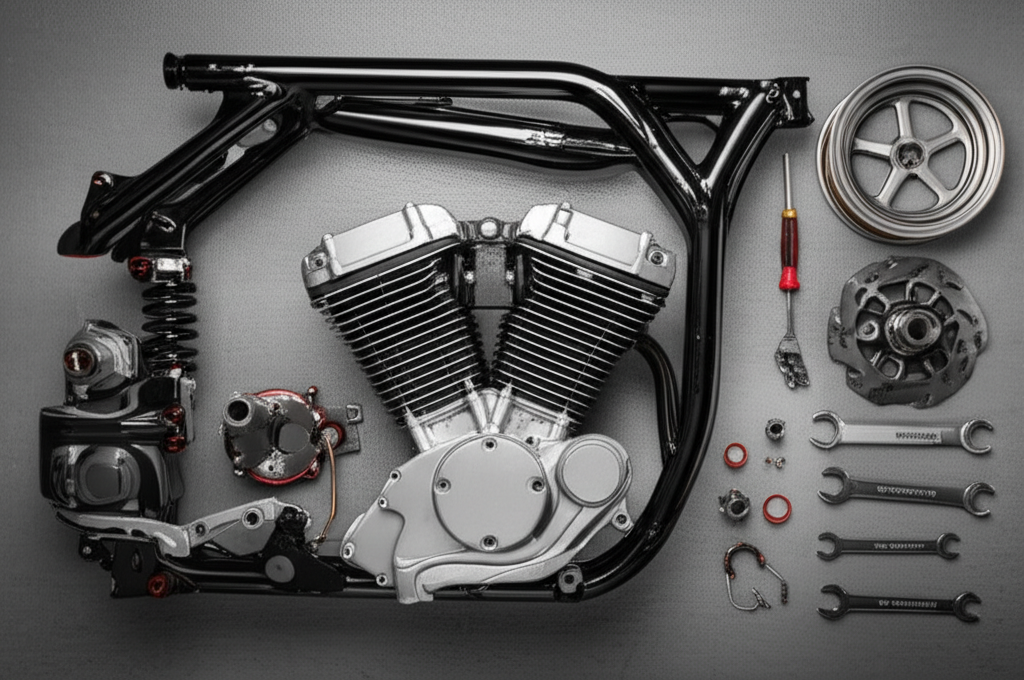
I’ll never forget the first time I truly wondered how a motorbike works. I wasn’t in a garage or a classroom but sitting on a dusty roadside, watching a mechanic in a small village skillfully bring a tired-looking bike back to life with just a handful of tools. It seemed like magic. How could this collection of metal, wires, and rubber create such an exhilarating feeling of freedom?
Over the years, I’ve learned that it isn’t magic but a beautiful symphony of engineering. Every single part has a job and they all work together in perfect harmony. If you’ve ever felt that same curiosity, you’re in the right place. We’re going to pull back the curtain and decode the engineering behind these incredible two-wheeled machines. I’ll walk you through it just like someone walked me through it years ago, piece by piece, without all the confusing jargon.
Introduction: The Symphony of Speed and Control
At its core, a motorcycle is a machine designed to do one thing: convert the chemical energy stored in fuel into controlled motion. It’s a dance between power and precision. The roar of the engine is the power and your hands and feet on the controls are the precision.
Think of it like an orchestra. The engine is the powerful brass section, the drivetrain is the rhythm section transferring that power, and the brakes and steering are the conductor—you—guiding the entire performance. Every system must work flawlessly with the others for the music to sound right. Let’s break down each section of this mechanical orchestra.
The Heart of the Beast: The Engine
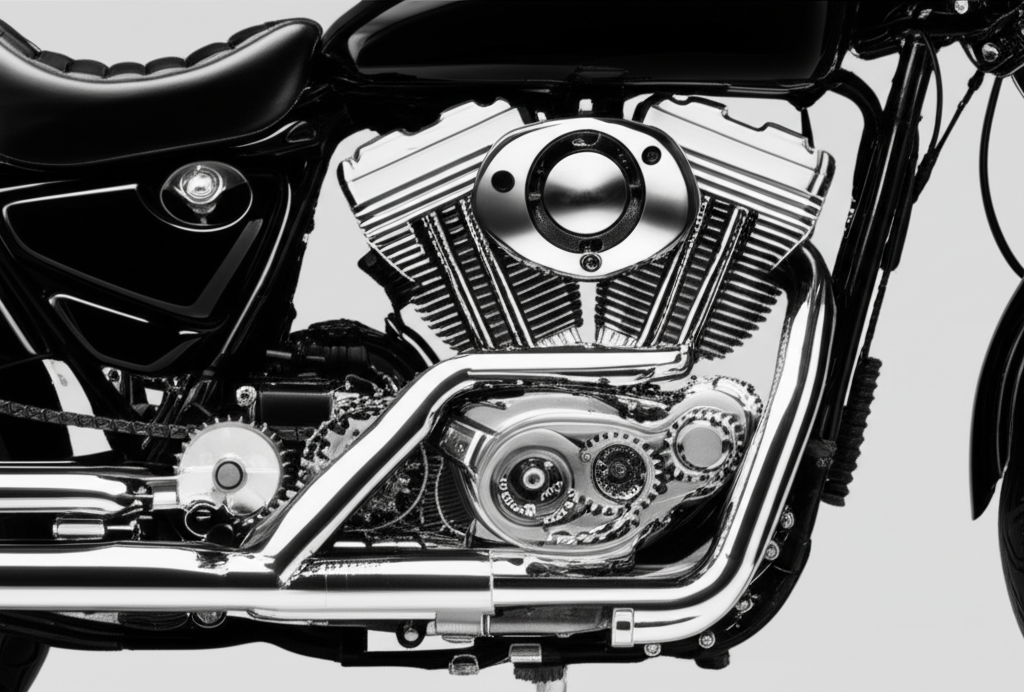
Everything starts here. The engine is the heart of your motorbike, the place where the fire happens. Its job is to create rotational force, or what we call torque, that will eventually turn the rear wheel. Most modern street bikes use what’s called a four-stroke internal combustion engine and once you understand its four simple steps, you’ve grasped the fundamental motor principle that powers your ride.
Internal Combustion Explained (The Four-Stroke Cycle)
Imagine the engine is breathing. The whole process is a cycle of four “strokes” or movements of a piston inside a cylinder.
This four-stroke cycle happens thousands of times per minute, creating a continuous flow of power. The speed at which it happens is measured in RPM, or Revolutions Per Minute. When your bike is idling at 1,200 RPM, this entire cycle is happening 600 times per minute in each cylinder!
Key Engine Components
To make that cycle happen, a few key players are involved:
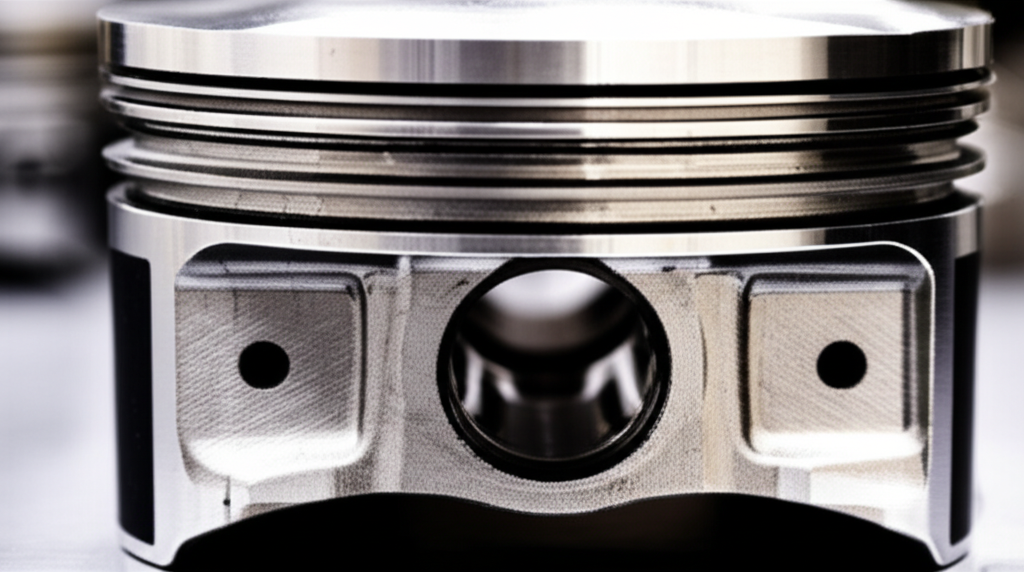
- Piston and Cylinder: The piston is a metal puck that moves up and down inside the hollow cylinder. It’s the primary moving part that captures the force of combustion.
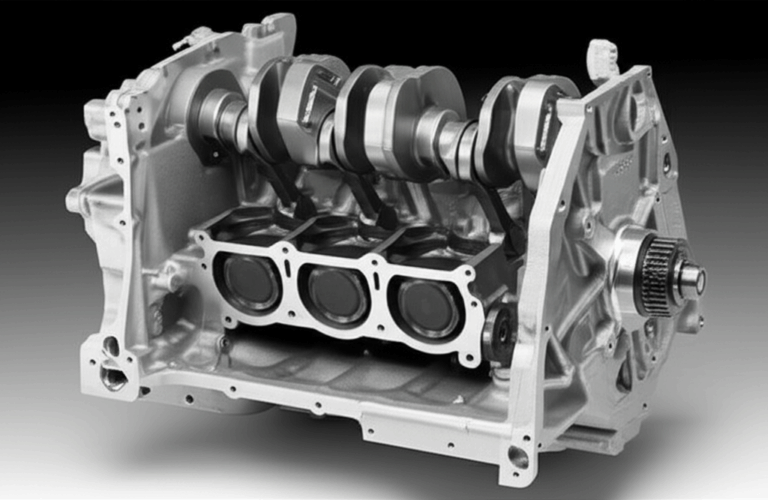
- Connecting Rod and Crankshaft: The connecting rod links the piston to the crankshaft. Think of it like your leg connecting your foot (the piston) to the pedal on a bicycle (the crankshaft). As the piston is forced down, it pushes the connecting rod, which turns the crankshaft. This is how the up-and-down motion gets converted into the crucial rotational motion.
- Valves and Camshaft: These are the gatekeepers for the intake and exhaust strokes. The camshaft is a rotating rod with lobes on it that precisely push the valves open and closed at the perfect moment in the cycle. This valve timing is critical for engine performance.
- Spark Plug: This small but mighty device delivers the high-voltage spark that ignites the air-fuel mixture. Without it, there’s no “bang” in the power stroke.
Engines come in different flavors too. You’ll hear about two-stroke engines (common in dirt bikes and older bikes) which complete the cycle in just two strokes but are less efficient. You’ll also hear about single-cylinder engines (“thumpers”) versus multi-cylinder engines (twins, triples, or inline-fours), which offer different power delivery and character.
Fueling the Fire: Air and Fuel Delivery
Before the engine can create power, it needs something to burn. That’s where the fuel and air delivery system comes in. The goal is to create the perfect air-fuel mixture for combustion. Too much fuel and it runs “rich”; too little and it runs “lean.” Both are bad for performance and engine health.
From Tank to Combustion Chamber
The journey starts at the Fuel Tank. A Fuel Pump (on most modern bikes) sends gasoline down a line towards the engine. Along the way, it passes through a Fuel Filter to catch any impurities.
Simultaneously, the engine needs air. Air is drawn in through an Air Filter and stored in an Airbox, which ensures the engine gets a steady supply of clean air.
Now, we need to mix them. For decades, this was the job of the Carburetor. It’s a mechanical device that uses a vacuum effect to suck fuel into the airstream. It’s clever but can be finicky, especially with changes in altitude or temperature.
Today, however, about 95% of new motorcycles use Electronic Fuel Injection (EFI). I’ve owned both carbureted and EFI bikes and the difference is night and day. EFI uses a small computer, sensors, and a Fuel Injector (a tiny, precise nozzle) to spray the exact right amount of fuel directly into the airstream. It’s incredibly efficient, reliable, and gives you better performance and fuel economy.
The Spark of Life: Ignition System
You’ve got the air-fuel mixture compressed in the cylinder. Now you need a spark to set it off. This is the job of the ignition system, which is part of the larger motorcycle electrical system.
Creating the Spark
It’s a three-step process to turn low voltage into a powerful spark:
It’s a perfectly timed electrical jolt that brings the engine to life.
Putting Power to the Ground: The Drivetrain
Okay, so the engine is roaring and the crankshaft is spinning furiously. How do we get that power to the rear wheel to actually move the bike? This is the job of the drivetrain. I like to think of it as the bridge between the engine and the road.
The Clutch: Engaging and Disengaging Power
The first stop for the engine’s power is the clutch. The clutch is your control link to the transmission. Its job is simple: to connect (engage) or disconnect (disengage) the engine’s power from the gearbox.
When you pull the Clutch Lever, you are separating a series of friction plates. This disconnects the engine’s spinning crankshaft from the transmission, allowing you to change gears or sit still with the engine running. When you slowly release the lever, those plates press together, creating friction and smoothly transferring power to the transmission. Mastering the clutch is one of the first and most important skills for any rider.
The Transmission (Gearbox): Matching Speed and Torque
The transmission, or gearbox, is a brilliant set of gears that allows you to manage the engine’s power. An engine is only efficient in a certain RPM range. The gearbox lets you keep the engine in that sweet spot whether you’re accelerating from a stoplight or cruising on the highway.
Think of it like the gears on a bicycle.
- Low Gears (like 1st gear): A small gear on the engine side drives a large gear on the output side. This multiplies torque, giving you the strong pulling power needed to get moving from a standstill.
- High Gears (like 6th gear): A large gear drives a smaller gear. This is for speed. You get less torque, but the wheel can spin much faster for the same engine RPM, which is perfect for efficient highway cruising.
You control this with the Gear Shifter Lever by your left foot. Each click up or down engages a different set of gears, changing the transmission ratio to suit your speed.
The Final Drive: From Gearbox to Wheel
The last leg of the journey is the final drive, which takes the spinning motion from the transmission’s output shaft and delivers it to the rear wheel. There are three common types:
- Chain Drive: This is the most common system. A small sprocket on the transmission turns a chain, which in turn spins a large sprocket on the rear wheel. Chains are efficient (only about 3-5% power loss) and lightweight, but they require regular cleaning, lubrication, and adjustment.
- Belt Drive: Similar to a chain but uses a carbon-fiber-reinforced belt. Belts are quieter, smoother, and require much less maintenance than chains. I love them for cruising bikes. They are slightly less efficient, with a 5-7% power loss.
- Shaft Drive: This is a fully enclosed system, much like the driveshaft on a car. It uses a spinning shaft and a set of gears at the rear wheel to turn it. Shaft drives are incredibly durable and virtually maintenance-free, making them ideal for long-distance touring bikes. However, they are heavier and have the highest power loss, around 7-10%.
Controlling the Ride: Steering, Braking, and Suspension
Power is nothing without control. Once the bike is moving, you need to be able to guide it, stop it, and stay comfortable. That’s where the chassis and control systems come in.
Steering: Guiding Your Path
Steering a motorcycle is more complex than just turning the Handlebars. The bike’s stability and agility are baked into its Steering Geometry, specifically the Rake and Trail. In simple terms, this is the angle of the front Forks and how the front axle is positioned relative to the steering axis. Engineers spend countless hours perfecting this geometry to make a bike feel stable at high speeds yet nimble in corners.
At low speeds, you turn the handlebars in the direction you want to go. But at higher speeds, you use a technique called counter-steering. You gently press the handlebar on the side you want to turn (press left to go left), which initiates a Lean Angle and carves the bike through the corner. It feels counter-intuitive at first but quickly becomes second nature.
Braking: Bringing it to a Stop
Being able to stop is even more important than being able to go. Most motorcycles have independent front and rear brakes, controlled by a lever on the right handlebar (front) and a pedal by your right foot (rear).
The vast majority of modern bikes use Disc Brakes. When you apply the brake, hydraulic Brake Fluid pushes a piston in a Brake Caliper, which squeezes brake pads against a metal disc (or rotor) attached to the wheel. The friction is what slows you down. Some smaller bikes or older models might use Drum Brakes on the rear, which are less powerful.
A huge advancement in safety is the Anti-lock Braking System (ABS). I wouldn’t buy a new bike without it. If the system detects a wheel is about to lock up and skid, it rapidly modulates the brake pressure for you. This allows you to brake as hard as possible without losing control, especially on wet or loose surfaces. It can shorten stopping distances by up to 30% in tricky conditions.
Suspension: Comfort, Grip, and Handling
The suspension system is your connection to the road. Its job is twofold: absorb bumps for rider comfort and keep the tires pressed firmly against the pavement for maximum grip.
- Front Forks: These are the two tubes that hold the front wheel. Inside are springs to absorb bumps and dampers (filled with oil) to control the speed of the spring’s movement.
- Rear Shock Absorber(s): The rear wheel is attached to a Swingarm, which pivots. One or two shock absorbers connect this swingarm to the bike’s Frame, performing the same spring and damping function as the forks.
The amount of Suspension Travel (how much the wheel can move up and down) varies. A road bike might have 4-6 inches of travel for a smooth ride, while a dedicated off-road bike could have over a foot of travel to soak up huge jumps and bumps. Proper suspension setup is key to great handling.
Essential Supporting Systems
A few other systems work in the background to keep everything running smoothly.
- Exhaust System: This system does more than just make noise! It channels the hot, toxic gases from the engine away from the rider. It also uses a Muffler to quiet the sound of combustion and often includes a Catalytic Converter to reduce harmful emissions.
- Cooling System: Engines get incredibly hot. Air-cooled engines use metal fins to dissipate heat into the passing air. Liquid-cooled engines, which are more common now, circulate a coolant (like antifreeze) through passages in the engine to a Radiator, where airflow cools it down. This allows for more consistent operating temperatures, typically between 80-100°C.
- Electrical System: We’ve touched on the battery and alternator, but this system also powers your lights, horn, dashboard (Speedometer, Tachometer), and all the sensors that make a modern bike run so well. The quality of the stator core lamination in the alternator is critical for reliable power generation.
From Rider Input to Roaring Motion: A Step-by-Step Overview
Let’s put it all together. Here’s how you, the rider, orchestrate this symphony:
Conclusion: The Integrated Machine
As you can see, a motorcycle isn’t just one thing; it’s a collection of dozens of brilliantly designed systems working in perfect unison. From the controlled explosion in the engine to the final push of the tire against the pavement, every part has a purpose.
The most amazing part to me is how all this complexity melts away when you’re riding. It becomes an extension of your body. Your inputs on the throttle, clutch, brakes, and handlebars become the thoughts that guide this incredible machine. Understanding how it works doesn’t take away the magic; it deepens your appreciation for the engineering and your connection to the ride. Now, when you hear that engine roar, you’ll know the incredible symphony that’s playing just for you.