How to Prime a Diesel Motor: Your Step-by-Step Guide
I’ve been there. That sinking feeling in the pit of your stomach when you turn the key, the engine cranks and cranks, but it just won’t fire up. You know you just changed the fuel filter, or maybe you pushed your luck and ran the tank dry. Now, you’re facing one of a diesel owner’s most common rites of passage: an air-locked fuel system.
Don’t panic. Getting the air out and priming your diesel motor is a job you can absolutely handle yourself. Over the years, I’ve done this on everything from my old Powerstroke pickup to tractors and heavy equipment. It can seem intimidating, but once you understand what’s happening and follow a few key steps, you’ll have that engine purring again in no time.
This guide is everything I’ve learned, condensed into a clear, step-by-step process. Let’s get you back on the road.
Table of Contents
- What is Priming and Why is it Essential for Diesel Engines?
- When Do You Need to Prime a Diesel Engine? (Common Scenarios)
- Essential Tools and Materials for Priming
- General Steps for Priming a Diesel Fuel System (The Core Process)
- Specific Priming Methods by Diesel System Type
- Troubleshooting: What If Your Diesel Still Won’t Start?
- Common Mistakes to Avoid During Diesel Priming
- Safety Precautions When Working with Diesel Fuel Systems
- Maintaining Your Diesel Fuel System to Prevent Air Locks
- Conclusion: Keep Your Diesel Running Smoothly with Proper Priming
What is Priming and Why is it Essential for Diesel Engines?
So, what exactly are we doing when we “prime” a diesel? In simple terms, priming is the process of manually pushing fuel through the system to force out any trapped air. It’s also often called bleeding the diesel fuel system.
Unlike a gasoline engine that can often forgive a little air, a diesel engine is a different beast entirely. It relies on extremely high pressure to inject a fine mist of fuel into the combustion chamber, which then ignites from the heat of compression alone—no spark plugs needed.
Air, unlike diesel fuel, is compressible. If you have an air bubble trapped in the fuel lines, injection pump, or injectors, it acts like a tiny shock absorber. When the system tries to build that critical high pressure, the air bubble just squishes down, absorbing the pressure instead of letting it build high enough to fire the injector. The result? A diesel engine cranking with no start.
Understanding the Diesel Fuel System and Air Locks
Think of your fuel system as a sealed straw. As long as the straw is full of liquid, you can easily suck the liquid up. But if there’s a big air bubble in the middle, you’ll just be sucking air. Your diesel’s fuel pump has the same problem. It’s designed to pump a non-compressible liquid (fuel), not a gas (air). This is a fundamental concept in the general motor principle of an internal combustion engine; it needs the right fuel delivery to function. A diesel fuel system air lock stops this process dead in its tracks.
Consequences of Not Priming Your Diesel Properly
Ignoring this step or doing it improperly isn’t just an inconvenience; it can cause real damage. Here’s what happens if you don’t prime a diesel engine correctly:
- Excessive Cranking: Continuously cranking a diesel with air in the lines puts a massive strain on your starter motor and batteries. I’ve seen starters burn out and batteries get drained completely from someone just hoping the engine would eventually catch.
- Injection Pump Damage: This is the big one. High-pressure fuel pumps, especially on modern common rail diesel engines, rely on diesel fuel for lubrication. When you force them to run dry or with air pockets, you’re essentially running precision metal parts against each other with no lubrication. This can cause catastrophic failure, and trust me, replacing an injection pump can cost thousands. It’s like running an engine with no oil.
- Injector Wear: The same goes for your fuel injectors. They are incredibly precise components that can be damaged by the hammering effect of air pockets passing through them at high pressure.
In my experience, almost all post-maintenance no-start issues are due to air in the system. Taking 20 minutes to prime it right saves you from a massive headache and a potentially huge repair bill.
When Do You Need to Prime a Diesel Engine? (Common Scenarios)
You won’t need to do this often, but there are a few very specific times when priming becomes non-negotiable.
- Running Out of Fuel: This is the classic scenario. When the tank runs dry, the fuel pump sucks in air, and that air fills the entire system from the tank to the engine.
- Fuel Filter Replacement: Every time you change your fuel filter or the fuel/water separator, you introduce a large volume of air into the system. This is probably the most common reason I find myself priming a diesel.
- Fuel System Component Replacement: If you’ve replaced a fuel pump, fuel lines, injectors, or even just loosened a banjo bolt fitting, you’ve created an opportunity for air to get in.
- Long-Term Storage: If a vehicle or piece of equipment has been sitting for months or years, the fuel might have drained back to the tank, leaving air in the lines.
- Major Engine Service: Any significant repair that involves disconnecting the fuel system will require a full prime before attempting a restart.
Essential Tools and Materials for Priming
You don’t need a professional workshop to do this, but having the right gear makes the job much smoother. Here’s my go-to list:
- Basic Hand Tools: A good set of wrenches (both box-end and socket) and screwdrivers is a must. You’ll often need a specific size, like a 10mm or 17mm, for bleeder screws and line nuts.
- Clean Rags and Absorbent Pads: Diesel fuel will spill. It’s inevitable. Be prepared with plenty of clean, lint-free rags to wipe up drips and catch fuel.
- New Fuel Filter: If you’re here because you’re changing the filter, make sure you have the correct new one, along with any new O-rings or seals it came with.
- Fresh Diesel Fuel: You’ll need some extra fuel, preferably in a clean container, to pre-fill the new filter housing.
- Bleed Container: A clear bottle or jar is perfect for catching fuel from the bleeder screws. Seeing the fuel flow change from bubbly to a solid stream is how you know you’re getting the air out.
- Safety Gear: Nitrile gloves are a must to keep diesel off your hands (it’s nasty stuff), and eye protection is always a smart idea.
- Optional but Helpful: Depending on your engine, a dedicated hand primer pump (Mityvac is a popular brand), a vacuum pump, or even a diagnostic scanner to cycle an electric fuel pump can be incredibly useful.
General Steps for Priming a Diesel Fuel System (The Core Process)
While the specifics vary between a Cummins, a Duramax, or a Kubota tractor engine, the fundamental process is the same. We’re just trying to push fuel from the tank to the injectors while giving the air a place to escape.
Step 1: Locate the Priming Point(s)
First, pop the hood and get your bearings. You need to find the fuel filter housing, the injection pump (on older models), and any bleeder screws. Your owner’s manual or a quick online search for your specific model can be a lifesaver here. Bleeder screws are small bolts or valves located at the highest points of the fuel filter head or injection pump, designed specifically to let air out.
Step 2: Access and Prepare Components
Make sure you have good light and clear access to the components. Put down some absorbent pads under the fuel filter to catch any spills. Safety first, always.
Step 3: Introduce Fuel and Bleed Air
This is the core of the job. You’ll use one of the methods I’ll detail below (hand pump, electric pump, etc.) to push fuel through the system. As you pump, you’ll crack open a bleeder screw until you see a solid, bubble-free stream of diesel fuel emerge. Then you’ll tighten it and move to the next point in the system.
Step 4: Start the Engine and Check for Leaks
Once you’re confident you’ve bled the low-pressure side of the system, it’s time to try starting the engine. It might take a few seconds of cranking, and it may run a little rough at first as the last bits of air work their way out of the high-pressure lines and injectors. Once it’s running, immediately do a visual inspection of everything you touched. Look for any signs of fuel leaks.
Step 5: Monitor Engine Performance
Let the engine idle for a few minutes. Listen for any sputtering or rough running, which might indicate there’s still a little air in the system. A short, gentle drive can help purge any remaining tiny bubbles.
Specific Priming Methods by Diesel System Type
How you prime your engine really depends on what kind of fuel system it has. Here are the most common methods I’ve used.
A. Manual Priming Pump (Hand Primer)
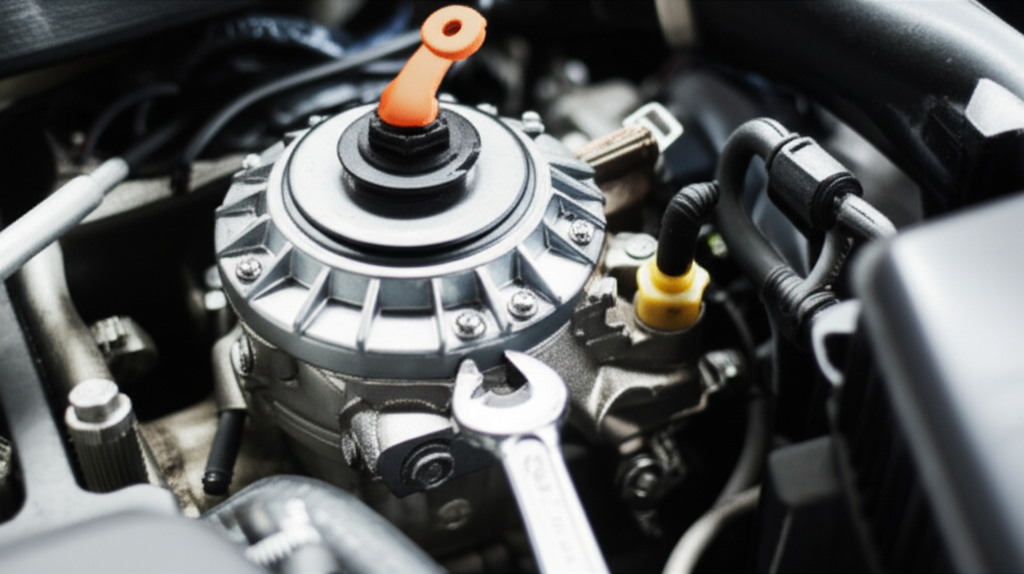
This is common on many older mechanical diesels, tractors, and heavy equipment. Look for a small, round plunger or button, usually on top of the fuel filter housing or on the side of the lift pump.
B. Electric Lift Pump (Key On/Off Method)
Most modern diesel trucks (like Powerstroke, Duramax, and modern Cummins) use an electric lift pump in or near the tank. This makes priming much easier.
C. Bleeding Screws/Valves
This technique is used in conjunction with a manual or electric pump. The sequence is everything.
- Start with the bleed point closest to the fuel tank (usually the primary filter).
- Loosen the screw.
- Use your priming method (hand pump or key cycle) to push fuel until all the air bubbles are gone.
- Tighten the screw while fuel is still flowing.
- Move to the next bleed point in the line and repeat.
D. Using a Vacuum Pump (External Priming)
Sometimes, a stubborn system just won’t prime. A hand-held vacuum pump can be a real lifesaver.
E. “Bump Starting” (Cranking with Care)
I list this last because it should be a last resort. This involves using the engine’s starter to turn the injection pump, which then pulls fuel through the system. Warning: This is hard on your starter and batteries and can damage the injection pump if done excessively.
Only use this method on systems that are designed for it (some older systems are) or if you’ve already primed the low-pressure side and just need to bleed the high-pressure injector lines. To do this, you’d slightly loosen the nut on one or two injector lines at the injector, crank the engine in short 10-15 second bursts, and watch for fuel to seep out. Once it does, tighten the lines, and the engine should start.
Troubleshooting: What If Your Diesel Still Won’t Start?
You’ve primed it, you’ve bled it, and you’re still just getting a cranking engine. It’s frustrating, but don’t give up. Let’s work through the common culprits.
- Check for Fuel Leaks: Did you tighten every screw and fitting? A tiny leak that lets fuel out will also let air in when the engine is off.
- Verify Fuel Supply: Are you sure there’s fuel in the tank? I know it sounds silly, but fuel gauges can be wrong. Also, check for clogs in the fuel pickup tube in the tank.
- Battery and Starter Health: Have you drained the batteries? Check their voltage. A weak battery might have enough power to crank the engine but not fast enough for it to build compression and fire.
- Air in Other Components: Did you bleed all the points? Sometimes a secondary filter or a high point in a fuel line can trap a stubborn air bubble.
- Fuel Pressure Testing: If you have a fuel pressure gauge, now is the time to use it. Check if your lift pump is actually generating the required pressure. No pressure means a dead pump.
- When to Call a Professional Mechanic: If you’ve tried everything and it still won’t go, it might be time to call for help. You could be dealing with a failed injection pump, a bad sensor (like a crankshaft position sensor), or another complex underlying motor problem that goes beyond a simple air lock. There’s no shame in knowing your limits.
Common Mistakes to Avoid During Diesel Priming
I’ve made a few of these myself over the years. Learn from my mistakes!
- Not Filling the Fuel Filter Properly: This is mistake #1. Always, always, always pre-fill your new filter with clean diesel. It saves you a massive amount of priming time. I’ve seen studies suggesting that up to 90% of filter-related issues can be avoided by this single step.
- Introducing Dirt or Contaminants: Use a clean funnel and fresh fuel. A tiny piece of dirt can wreck a high-pressure fuel injector. The internals of your fuel system are incredibly precise, much like the meticulously stacked motor core laminations inside an electric motor; a small imperfection can cause a big failure.
- Overtightening Bleeder Screws: These are often small and made of soft metal. They don’t need to be torqued down with all your strength. Snug is good enough. Stripping one of these creates a much bigger problem.
- Ignoring Safety Precautions: Working in a poorly ventilated area or having ignition sources nearby is a recipe for disaster.
- Excessive Cranking Without Fuel Flow: As I said before, this is a great way to kill your starter and potentially your injection pump. Crank in 15-second intervals, then let the starter cool for a minute.
Safety Precautions When Working with Diesel Fuel Systems
This is serious business. Fuel is flammable, and the pressures in a common rail system can be high enough to inject fuel directly through your skin, which is a severe medical emergency.
- Ventilation: Work in a well-ventilated area, preferably outdoors.
- Fire Hazards: No smoking, no sparks, no open flames. Keep a fire extinguisher (Class B rated) handy.
- Personal Protective Equipment (PPE): Wear gloves and safety glasses.
- Fuel Spill Containment: Have a plan to contain spills. Use a drain pan and absorbent materials.
Maintaining Your Diesel Fuel System to Prevent Air Locks
The best way to fix a problem is to prevent it from happening in the first place.
- Regular Fuel Filter Replacement: Follow your manufacturer’s service interval. This is the single best thing you can do for your fuel system.
- Keeping Fuel Tank Full: Try not to run your tank below a quarter full. This prevents the fuel pickup from sucking in air on inclines and reduces condensation buildup in the tank.
- Inspecting Fuel Lines and Connections: Periodically look for any wet spots, cracks, or loose fittings that could indicate a leak.
- Using Quality Fuel and Additives: Good, clean fuel from a high-turnover station prevents algae growth and contamination that can clog your system.
Conclusion: Keep Your Diesel Running Smoothly with Proper Priming
Priming a diesel fuel system is one of those skills that transforms you from a diesel driver to a diesel owner. It gives you the confidence to perform your own maintenance and to troubleshoot one of the most common problems you’ll ever face.
Remember the key takeaways: air is the enemy, pre-filling your filter is your best friend, and patience is crucial. Follow the steps, work safely, and you’ll be able to tackle any air lock that comes your way. Now that you’re armed with this knowledge, you can keep that powerful diesel engine running just the way it was designed to.
What are your own priming tips or tricks? Share them in the comments below