How to Use a Trolling Motor: A Complete Beginner’s Guide to Mastering Boat Control & Fishing
Sure, here is your article:
I still remember the first time I went out with a trolling motor. It felt like I’d unlocked a superpower on the water. No more struggling with oars or startling fish with a noisy outboard. Suddenly, I could hover silently over a submerged rock pile, glide along a shoreline without making a sound, and hold my position in the wind with just a tap of my foot. It completely changed the way I fish.
But I also remember being a little intimidated. All those wires, the heavy battery, the weird-looking foot pedal—it was a lot to take in. If you’re feeling that way now, don’t worry. This guide is for you. I’m going to walk you through everything you need to know, from the absolute basics to some of the advanced features that make these motors so incredible. By the time we’re done, you’ll be handling your boat like a seasoned pro.
Table of Contents
- Getting Started: Pre-Operation Setup & Checks
- Understanding Your Trolling Motor Type
- Battery Essentials for Powering Your Motor
- Mounting & Initial Deployment Basics
- Step-by-Step: Operating Your Trolling Motor
- Powering On & Basic Controls
- Mastering Steering Techniques
- Deploying & Stowing the Motor Safely
- Utilizing Advanced Features (Smart Trolling Motors)
- Mastering Boat Control & Fishing Applications
- Basic Maneuvering: Forward, Backward, and Turning
- Navigating in Challenging Conditions
- Trolling Motor for Enhanced Fishing
- Maintenance, Troubleshooting & Best Practices
- Essential Regular Maintenance Tips
- Common Issues & Simple Solutions
- Trolling Motor Safety Considerations
- Conclusion: Practice Makes Perfect
Getting Started: Pre-Operation Setup & Checks
Before you even think about hitting the water, a little preparation goes a long way. Getting the setup right from the start will save you a world of headache later. Trust me, I’ve learned this the hard way.
Understanding Your Trolling Motor Type
First things first, you need to know what you’re working with. Trolling motors come in a few different flavors, and how you use them depends on their design.
1. Bow Mount vs. Transom Mount: Key Differences and Applications
The biggest difference you’ll see is where the motor is mounted on your boat.
- Bow-Mount Motors: These are mounted at the front (the bow) of the boat. This is the setup you’ll see on most bass boats and serious fishing rigs. Why? Because pulling the boat through the water gives you far more precise control than pushing it from the back. It’s like leading a dog on a leash versus trying to push it with a stick. You have much finer control over your direction and can make tiny adjustments to stay right on top of that fishing spot.
- Transom-Mount Motors: These clamp onto the back of the boat (the transom), right where you’d put a small outboard. They’re great for smaller boats like jon boats, canoes, and inflatables. They’re generally less expensive and easier to install, making them a popular choice for getting started. While they don’t offer the pinpoint accuracy of a bow mount for casting, they’re perfect for slowly trolling along a shoreline.
2. Control Types: Hand Control, Foot Pedal, and Remote/Wireless Control
How you “drive” your trolling motor is the next big piece of the puzzle.
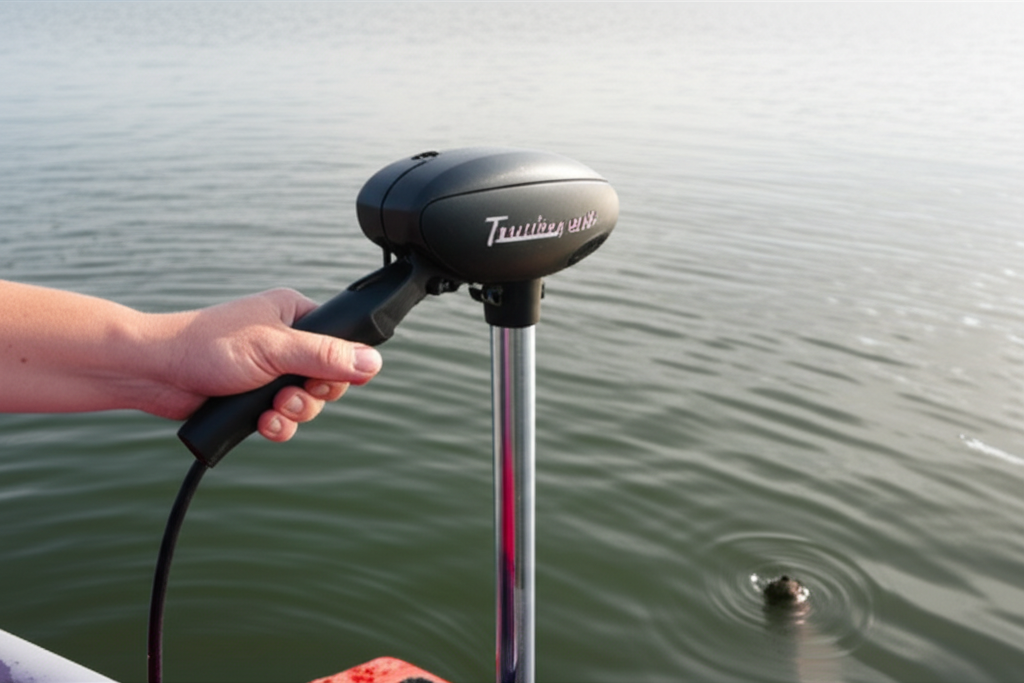
- Hand Control: This is the simplest type, usually found on transom-mount motors. It’s essentially a tiller handle that you twist to control speed and move left or right to steer. It’s intuitive and reliable, but it means you need to keep one hand on the motor at all times.
- Foot Pedal Control: This is the choice for most serious anglers. A pedal on the floor of the boat lets you control speed and direction with your feet, leaving both hands free for casting, fighting fish, and enjoying a cold beverage. It takes a little practice to get the hang of it, but once you do, it becomes second nature. Some have a simple “toe-down, heel-down” system for turning, while others use a side-to-side pedal.
- Remote/Wireless Control: The newest and coolest option. Many modern bow-mount motors come with a small, handheld remote (some even look like a TV remote or a key fob). This lets you control the motor from anywhere in the boat. It’s fantastic for when you’re fishing from the back of the boat but have a bow-mounted motor.
Battery Essentials for Powering Your Motor
Your trolling motor is an electric motor, and without a good battery, it’s just a very expensive anchor. Don’t skimp here.
- Choosing the Right Battery: You can’t just use your car battery. You need a deep cycle battery, which is designed to provide a steady amount of power over a long period. Car batteries are designed to give a big burst of power to start the engine and then get recharged. A trolling motor would drain a standard car battery in no time.
- Lead-Acid/AGM: These are the traditional, affordable choice. They’re heavy but reliable. I used these for years without issue.
- Lithium-Ion (LiFePO4): These are the new kids on the block. They are much lighter, last significantly longer on a single charge (often 2-3 times as long), and have a much longer overall lifespan. The downside? They are considerably more expensive upfront. However, if you fish a lot, the investment can be worth it in the long run.
- Proper Wiring & Connections: Your motor will be either 12-volt, 24-volt, or 36-volt. This determines how many batteries you need and how to wire them.
- A 12V system uses one 12V battery. Simple.
- A 24V system requires two 12V batteries connected in series (positive of the first battery to the negative of the second). This doubles the voltage to 24V.
- A 36V system requires three 12V batteries connected in series.
It is critically important to get this wiring right. Always double-check your motor’s manual. I also highly recommend installing a circuit breaker or fuse on the positive line as a safety measure. It can save your motor from damage if something shorts out.
- Checking Battery Charge: Before you leave the house, make sure your batteries are fully charged. A dead battery can ruin a fishing trip faster than a thunderstorm. A simple voltmeter can give you a quick reading, but a good onboard charger is a fantastic investment for keeping your batteries healthy and ready to go.
Mounting & Initial Deployment Basics
Before you can use it, you have to get it in the water.
- Secure Mounting: Whether it’s bolted to the bow or clamped to the transom, make sure it’s tight. The last thing you want is your expensive motor taking a swim. Give it a good shake before you launch the boat every single time.
- Adjusting Shaft Depth: This is crucial and often overlooked. The top of the motor unit (the part with the propeller) should be submerged at least 6 inches below the waterline. If it’s too shallow, the prop will cavitate, meaning it will suck in air, make a lot of noise, lose power, and scare every fish in a hundred-yard radius. If it’s too deep, you risk hitting bottom in shallow water and damaging the propeller or the shaft. Most motors have an adjustable collar on the shaft for this purpose.
Step-by-Step: Operating Your Trolling Motor
Alright, you’re at the lake, the boat is in the water, and everything is hooked up. Let’s get moving.
A. Powering On & Basic Controls
B. Mastering Steering Techniques
- Hand Control: This is straightforward. It’s like a tiller on a small outboard. Push the handle left to turn the boat right, and push it right to turn the boat left. It feels a little backward at first, but you’ll get used to it quickly.
- Foot Pedal Control: This takes a little practice. Most cable-steer pedals pivot from the middle. Pushing the front (toe end) down turns the motor one way, and pushing the back (heel end) down turns it the other. There’s usually a button on the pedal for “momentary on” (it runs only while you hold it down) and another switch for “constant on.” I spend most of my day using the momentary button for precise adjustments as I cast along a bank.
- Remote Control: This is the easiest of all. Just use the directional arrows on the remote. It feels like playing a video game. The remote will also have buttons for speed control and any other special features your motor has.
C. Deploying & Stowing the Motor Safely
This is one of the most important things to master to avoid damaging your gear or yourself.
- Deploying (Putting it in the water): Most bow mounts have a pull cord and a latch mechanism. You pull the cord to release the lock, then guide the motor down into the water until it clicks into its running position. Always maintain a firm grip on the motor head. Don’t just let it drop!
- Stowing (Pulling it out of the water): This is the reverse. Pull the cord to unlock it, then lift the motor up and guide it back into its cradle on the deck. Make sure it latches securely. I’ve seen guys forget to lock it down and hit a big wave, sending the motor crashing back into the water. It’s not a pretty sight.
D. Utilizing Advanced Features (Smart Trolling Motors)
Modern trolling motors from brands like Minn Kota, Garmin, and Lowrance are packed with GPS technology that feels like magic.
- GPS Spot-Lock / Anchor Mode: This is a game-changer. With the press of a button, the motor will use its internal GPS to hold your boat in that exact spot, regardless of wind or current. No more dropping an anchor and dealing with ropes. You find the fish, hit Spot-Lock, and you can focus entirely on fishing. It’s probably the single most valuable feature on a modern trolling motor.
- Autopilot / Navigational Modes: You can set a heading (e.g., due north) and the motor will keep you on that line automatically. Some models can even follow a pre-recorded track or a specific depth contour on your fish finder’s map. This is fantastic for trolling or methodically covering large areas.
- Cruise Control: Just like in your car. Set a speed, and the motor will maintain it, automatically adjusting for wind or current. This is perfect for trolling lures at a consistent speed.
Mastering Boat Control & Fishing Applications
Now that you know the basics of how it works, let’s talk about how to use it to catch more fish.
A. Basic Maneuvering: Forward, Backward, and Turning
The key to trolling motor control is to be gentle. Small, subtle adjustments are all you need.
- Forward: Simply point the motor head in the direction you want to go and apply power. Easy.
- Reverse: Many motors can turn 180 degrees. By turning the motor head completely around, you can use reverse thrust to stop quickly or back away from an obstacle. It’s a lifesaver when you’re about to drift into a dock or an overhanging tree.
- Turning: With a bow-mount motor, you’re pulling the boat. So, to turn right, you point the motor head to the right. To turn left, point it left. It’s very intuitive.
B. Navigating in Challenging Conditions
- Wind & Current: This is where a trolling motor really shines. Instead of being at the mercy of the elements, you can use the motor to counteract them. When fishing in the wind, I often point the bow of my boat into the wind and use the motor to either hold my position or control my drift backward over a specific spot. This gives me far more control than trying to drift with the wind.
- Shallow Water: Be mindful of your motor’s depth. As you move into shallower areas, you may need to raise the motor shaft to prevent the prop from hitting the bottom, which can cause serious damage.
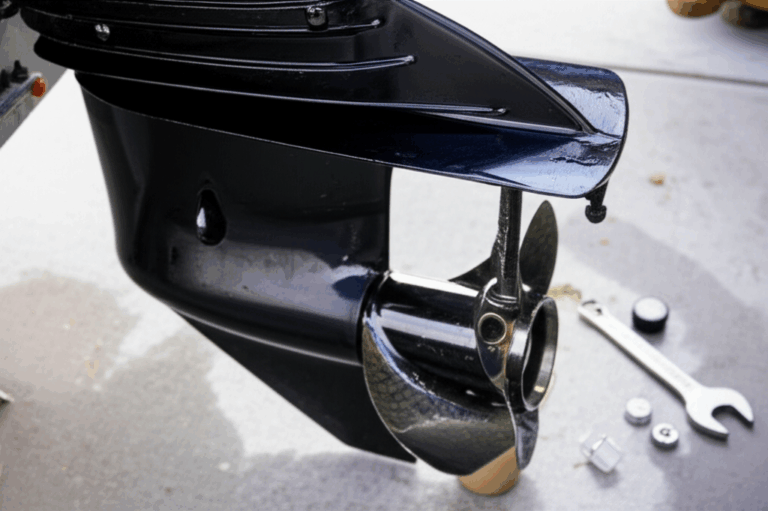
- Weeds & Obstacles: Modern props, like Minn Kota’s Weedless Wedge, are great at chopping through vegetation. But even the best props can get tangled in heavy grass or fishing line. If you feel the motor vibrating or losing power, immediately turn it off and check the prop.
C. Trolling Motor for Enhanced Fishing
- Precise Boat Positioning: This is the core advantage. You can position your boat perfectly to cast at a specific tree, rock pile, or dock. You can hold yourself just the right distance from a weed line and work your way down it methodically. This level of control is impossible with a big outboard engine.
- Slow Trolling Techniques: For species like crappie or walleye, maintaining a very slow, precise speed is key. A trolling motor allows you to dial in the perfect speed (e.g., 0.5 mph) and keep it there, something your main engine can’t do.
- Stealth Mode: Electric motors are incredibly quiet. You can sneak up on spooky fish in shallow water without announcing your presence. I can’t count the number of bass I’ve caught by silently gliding into a cove that would have been impossible to approach with my gas motor.
Maintenance, Troubleshooting & Best Practices
A little TLC goes a long way in keeping your motor running smoothly for years.
A. Essential Regular Maintenance Tips
- Propeller Inspection: After every trip, check the propeller for tangled fishing line, weeds, or damage. A small nick or chip can cause vibration and reduce efficiency.
- Battery Care: Keep your batteries charged! Never store them in a discharged state, especially over the winter. Keep the terminals clean and free of corrosion. A little dielectric grease can work wonders.
- General Cleaning: Wipe down the motor shaft and head after use, especially in saltwater. This prevents corrosion and keeps everything looking good.
B. Common Issues & Simple Solutions
- Motor won’t turn on: 99% of the time, this is a simple connection issue. Check that your battery is charged, the terminals are tight, and the plug is securely connected. Also, check the circuit breaker or fuse.
- Weak Power: This is almost always a low battery. Make sure your battery is fully charged. If it is, check for weeds on the prop or a bad connection that’s causing voltage drop.
- Steering Problems: On a cable-steer model, check the tension of the steering cables. On an electric-steer model, check the remote’s battery or for any potential signal interference.
C. Trolling Motor Safety Considerations
- Propeller Safety: The propeller might look small, but it spins fast and can cause serious injury. Never touch it while it’s running, and always disconnect the motor from the battery before doing any maintenance on the prop.
- Electrical Safety: Water and electricity don’t mix. Ensure all your wiring is properly insulated and connections are secure to prevent shorts. Fuses and circuit breakers are not optional—they are essential safety devices.
- Navigation Awareness: Just because you’re moving quietly doesn’t mean you have the right of way. Always be aware of other boats, swimmers, and obstacles in the water.
Conclusion: Practice Makes Perfect
Learning to use a trolling motor is like learning to ride a bike. It might feel a bit wobbly at first, especially with a foot pedal, but it will quickly become second nature. The best advice I can give you is to get out on the water and just use it. Spend an hour in an open area just practicing maneuvers: holding a spot, making tight turns, and moving sideways against the wind.
The control and stealth a trolling motor provides will fundamentally change how you fish, allowing you to get closer to the action and stay there longer. It’s one of the most valuable tools in any serious angler’s arsenal. So get out there, practice, and get ready to catch more fish