Motors vs. Engines: Are They the Same Thing? [The Definitive Guide]
You’ve heard the terms thrown around your whole life, often interchangeably. “Motorcycle.” “Motorboat.” “The car’s engine.” But then you hear about the electric motor in a Tesla, and it feels different. If you’re an engineer, a designer, or just someone curious about how things work, you’ve likely paused and wondered: are a motor and an engine truly the same thing?
The short answer is no, they aren’t. While they often achieve the same goal—creating motion—they are fundamentally different beasts, distinguished by the type of energy they consume and how they convert it into useful work. Understanding this distinction isn’t just about winning a trivia night; it’s crucial for clarity in engineering, design, and navigating a world rapidly shifting towards new forms of power.
This guide is designed to be your definitive resource. We’ll break down the problem, explain the core engineering principles in simple terms, guide you through their differences and similarities, and empower you with the knowledge to speak about them with confidence.
In This Article
- Defining the “Motor”: Electrical Power to Mechanical Motion
- Defining the “Engine”: Harnessing Heat from Fuel
- The Core Distinction: Energy Source & Conversion Process
- Are There Any Similarities? Bridging the Gap
- Why the Confusion? Colloquial vs. Technical Usage
- Motor vs. Engine: Practical Examples in the Real World
- Conclusion: Clarifying the Terminology for Good
Defining the “Motor”: Electrical Power to Mechanical Motion
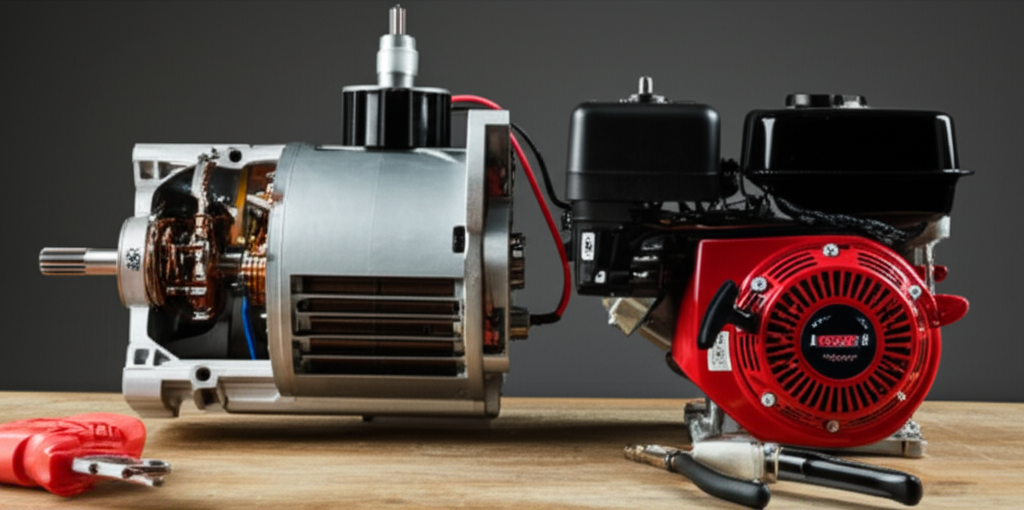
At its heart, a motor is a sophisticated device that performs a kind of technological alchemy: it converts electrical energy into mechanical energy. That’s its entire job description. When you plug in a blender, a fan, or charge an electric vehicle, you’re supplying the electricity that a motor will transform into the spinning, whirring motion that gets the job done.
How It Works: The Magic of Electromagnetism
The working motor principle is rooted in electromagnetism, a fundamental force of nature. Imagine you have two magnets. If you bring their north poles together, they repel. Bring a north and a south pole together, and they attract. Now, picture this interaction happening thousands of times per second in a controlled, circular fashion.
A motor achieves this by using electricity to create temporary magnets (electromagnets).
This process is remarkably efficient. High-quality electric motors can convert over 90% of the electrical energy they receive directly into mechanical force, with very little wasted as heat.
Energy, Characteristics, and Types
- Energy Input: Purely electrical energy. This can be Alternating Current (AC) from a wall outlet or Direct Current (DC) from a battery.
- Energy Output: Mechanical energy, delivered as torque (rotational force) and speed (RPM).
- Key Characteristics:
- Quiet and Smooth: With no explosions or reciprocating parts, motors operate with minimal noise and vibration.
- Clean at Point of Use: They produce zero direct emissions or exhaust gases.
- Instant Torque: A motor can deliver its maximum torque from a standstill (0 RPM), which is why electric cars feel so incredibly quick off the line.
- High Efficiency: As mentioned, they are masters of energy conversion, wasting very little.
- Common Types & Applications:
- AC Motors: These are the workhorses of industry and home life, found in everything from HVAC systems, pumps, and compressors to washing machines and refrigerators.
- DC Motors: Often powered by batteries, these are crucial in robotics, power tools, automotive applications (like window controls), and consumer electronics. The rise of brushless DC motors, with their superior efficiency and longevity, has revolutionized everything from drones to electric vehicles. The design of a bldc stator core is critical for its performance.
Defining the “Engine”: Harnessing Heat from Fuel
An engine, on the other hand, is a heat machine. Its job is to convert thermal energy into mechanical energy. It does this by burning a fuel to generate heat, which creates high-pressure gas that expands and pushes mechanical parts to create motion. The term “engine” is a bit broader and can technically include external combustion devices, but today, it most often refers to the internal combustion engine (ICE).
How It Works: The Controlled Explosion
Think of the engine in a typical car. It works by creating thousands of tiny, controlled explosions every minute. This process, known as the four-stroke cycle, was pioneered by Nikolaus Otto in the 19th century and still powers most of the vehicles on the road today.
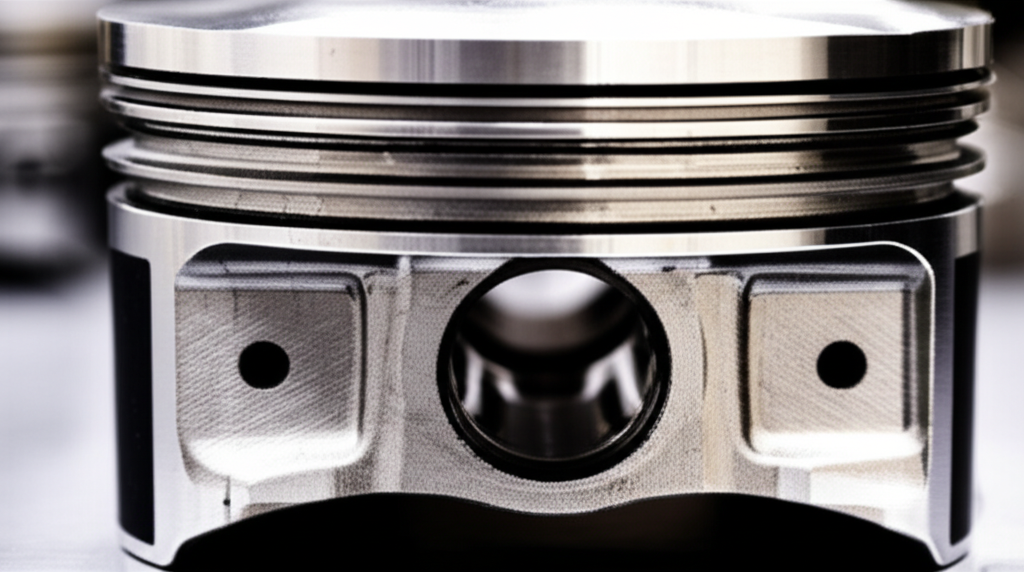
This linear up-and-down motion of the pistons is converted into rotational motion by a crankshaft, which then powers the wheels. This entire thermodynamic cycle is a brilliant but inherently inefficient process. A huge amount of the energy created from burning fuel is lost as waste heat through the engine block and the exhaust system.
Energy, Characteristics, and Types
- Energy Input: Chemical energy stored in a fuel (gasoline, diesel, natural gas, jet fuel). This is converted to thermal energy through combustion.
- Energy Output: Mechanical energy, delivered as torque and horsepower.
- Key Characteristics:
- Noise and Vibration: The combustion process is inherently loud and creates significant vibration.
- Produces Emissions: Burning fuel creates exhaust gases like carbon dioxide (CO2), nitrogen oxides (NOx), and other pollutants.
- Builds Power with RPM: An engine produces very little torque at low RPMs and must “rev up” to reach its peak power band.
- Lower Efficiency: A typical gasoline engine might only convert 20-35% of the fuel’s energy into useful work. The rest is lost as heat.
- Common Types & Applications:
- Internal Combustion Engines (ICE): This family includes gasoline engines (in cars), diesel engines (in trucks and heavy machinery, pioneered by Rudolf Diesel), and jet engines (in aircraft).
- External Combustion Engines: These burn fuel outside the engine to create pressure. The classic example is James Watt’s steam engine, which powered the Industrial Revolution.
The Core Distinction: Energy Source & Conversion Process
So, let’s boil it all down. The fundamental, non-negotiable difference between a motor and an engine is this:
- A motor converts electrical energy into mechanical motion through electromagnetism.
- An engine converts chemical energy (fuel) into thermal energy, then into mechanical motion through combustion and thermodynamics.
This core difference creates a cascade of other distinctions that are critical for any engineering or design application.
| Aspect | Electric Motor | Internal Combustion Engine |
|---|---|---|
| Energy Input | Electrical Energy (AC/DC) | Chemical Energy (Fuel) |
| Conversion Process | Electromagnetism | Thermodynamics / Combustion |
| Energy Conversion Efficiency | 85-95% | 20-40% (Gasoline), 30-50% (Diesel) |
| Direct Emissions | Zero | CO2, NOx, Particulates |
| Noise & Vibration | Very Low | High |
| Peak Torque Delivery | Instantaneous (at 0 RPM) | Builds with RPM |
| Mechanical Complexity | Lower (fewer moving parts) | Higher (pistons, valves, crankshaft, etc.) |
| Maintenance | Minimal (no oil, plugs, filters) | Regular (oil changes, spark plugs, belts) |
| “Refueling” Method | Recharging a battery | Pumping liquid fuel |
These differences have profound real-world implications. The high efficiency and zero emissions of motors are driving the global shift to electric vehicles. However, the incredible energy density of liquid fuels gives engines an advantage in applications requiring long range and rapid refueling, such as long-haul trucking and commercial aviation.
Are There Any Similarities? Bridging the Gap
Despite their fundamental differences, motors and engines aren’t total strangers. They share a crucial common purpose that often places them in the same category in broader discussions.
- They Are Both “Prime Movers”: In engineering, a prime mover is any machine that transforms energy from a thermal, electrical, or pressure source into mechanical work. Both motors and engines fit this description perfectly. They are the starting point of a powertrain, designed to get things moving.
- They Produce the Same Output: Ultimately, both devices are designed to produce torque and rotational power. This output is then used to turn wheels, spin propellers, drive pumps, or power machinery.
- They Can Work Together: The lines are blurring further with the rise of hybrid vehicles. A car like the Toyota Prius uses both an internal combustion engine and one or more electric motors. The system intelligently switches between them—or uses them in tandem—to maximize fuel economy and performance, combining the best of both worlds.
Why the Confusion? Colloquial vs. Technical Usage
If the distinction is so clear, why do we get them mixed up? The confusion is deeply rooted in history and everyday language.
The word “motor” comes from the Latin movere, meaning “to move.” Historically, it was a very general term for anything that produced motion. When the first automobiles appeared in the late 19th century, powered by newfangled internal combustion engines, they were marketed as “horseless carriages” or, more catchily, “motor cars.”
Companies like Ford and General Motors became “motor companies,” and the term became permanently linked to the automobile in the public mind. To this day, we talk about “motorcycles,” “motorboats,” and the “Department of Motor Vehicles,” all of which predominantly involve vehicles powered by engines.
In technical and engineering circles, however, the distinction has always been precise. An engineer designing a propulsion system for a ship will speak specifically about the diesel engine or the electric motor because their operating principles, maintenance needs, and performance characteristics are worlds apart. As technology evolves, especially with the rise of EVs, the technically correct distinction is becoming more important in everyday conversation. Good quality motor core laminations are essential to the efficiency of these modern machines.
Motor vs. Engine: Practical Examples in the Real World
Seeing these devices in action is the best way to solidify your understanding. Let’s look at a few head-to-head comparisons.
Automobiles: Tesla Model 3 vs. Ford F-150
- Tesla Model 3 (Motor): Its near-silent operation, instant acceleration, and smooth power delivery are all hallmarks of its electric motor. “Fueling” involves plugging into a charger. Maintenance avoids oil changes, spark plugs, and exhaust systems, which are common sources of a motor problem.
- Ford F-150 (Engine): The rumble of its gasoline engine is unmistakable. Power builds as you press the accelerator and the engine’s RPMs increase. It requires regular refueling at a gas station and a routine maintenance schedule to keep its many complex mechanical parts in working order.
Boats: Electric Trolling Motor vs. Outboard Engine
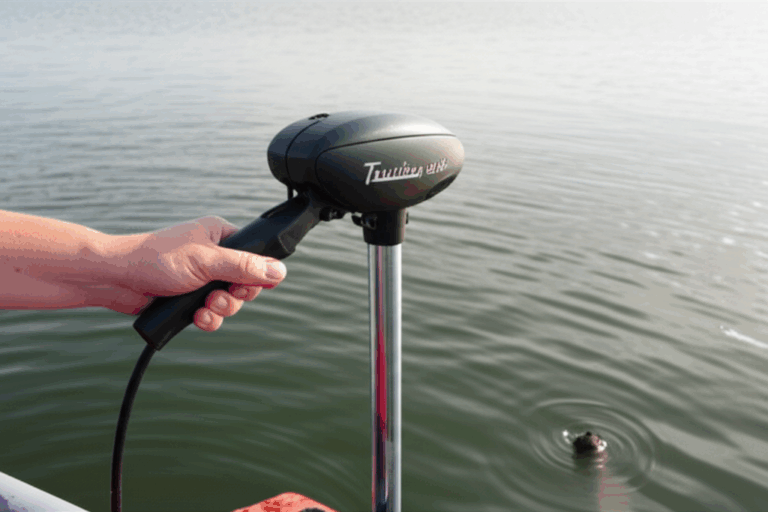
- Electric Trolling Motor: This small device, often mounted on the bow of a fishing boat, uses a DC motor powered by a battery. It’s prized for its silent, precise control, allowing anglers to sneak up on fish without the noise and exhaust of a traditional engine.
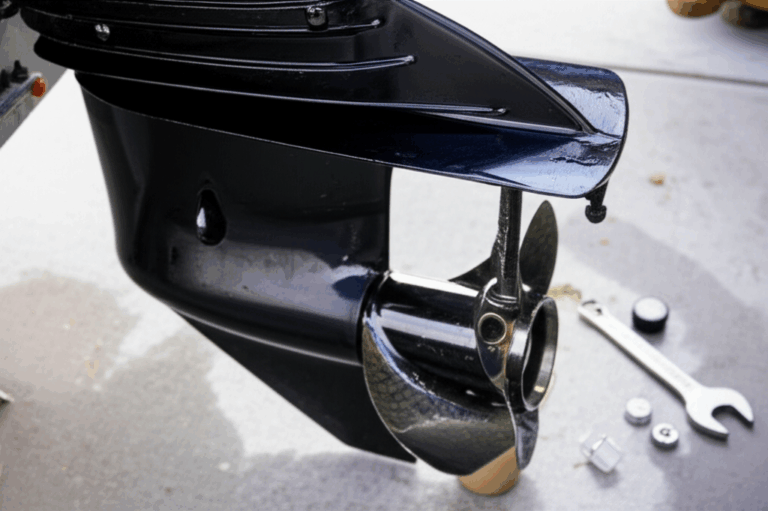
- Outboard Engine: A classic Mercury or Yamaha outboard is a self-contained internal combustion engine. It’s powerful, loud, and uses gasoline to propel the boat at high speeds across the water.
Lawn Care: Cordless Electric Mower vs. Gasoline Mower
- Electric Mower (Motor): It starts with the push of a button, runs quietly, and produces no smelly fumes. Its power comes from a rechargeable battery pack. It’s a perfect example of a modern motor motor application replacing a traditional engine.
- Gasoline Mower (Engine): This requires pulling a starter cord to get the small two- or four-stroke engine running. It’s loud, vibrates significantly, and requires a mixture of gas and oil, producing noticeable exhaust.
Conclusion: Clarifying the Terminology for Good
So, while you might get a pass for calling a car’s engine a “motor” in casual conversation, the technical reality is clear: motors run on electricity, and engines run on fuel.
- A motor is an electrical machine, converting electrical energy into motion via electromagnetism. It’s clean, quiet, and highly efficient.
- An engine is a thermal machine, converting the chemical energy in fuel into motion via combustion. It’s powerful but less efficient, producing heat, noise, and emissions as byproducts.
They are both prime movers designed to create mechanical work, but their methods are fundamentally different. As we stand at a crossroads of technological evolution, with electric propulsion systems rapidly gaining ground in everything from cars to aircraft, understanding this difference is no longer just an academic exercise. It’s key to understanding the future of how we move.