What is a Motor Soft Starter? The Essential Guide to Smoother Motor Control
Ever heard a big machine, like an air conditioner or a factory pump, start up with a loud THUMP and see the lights flicker for a second? That’s the raw power of an electric motor kicking into gear instantly. While it might sound powerful, that sudden jolt is actually causing a lot of stress on the motor and the entire electrical system. It’s like flooring the gas pedal in your car from a dead stop—you get a violent jerk, not a smooth ride. What if there was a better, gentler way?
That’s where a motor soft starter comes in. Think of it as a gentle “on-ramp” for your motor, allowing it to get up to speed smoothly and safely. This guide will explain what a soft starter is, how it works, and why it’s a game-changer for so many industries. We’ll break down the complex parts into simple ideas, helping you understand how this smart device can save you money, reduce wear and tear, and make your machinery last longer.
Table of Contents
- What Is the Big Problem with Starting Motors?
- So, What Exactly Is a Motor Soft Starter?
- How Does a Soft Starter Work Its Magic?
- What Are the Biggest Benefits of Using a Soft Starter?
- Where Are Soft Starters Commonly Used?
- Soft Starter vs. VFD vs. DOL Starter: What’s the Difference?
- How Do I Choose the Right Soft Starter?
- The Future of Motor Control is Smart and Smooth
- Frequently Asked Questions (FAQ)
- Key Takeaways
What Is the Big Problem with Starting Motors?
When you flip the switch on a big AC motor, it’s like opening a floodgate. An enormous amount of electrical current, often 6 to 8 times the motor’s normal running current, rushes in. This is called inrush current or starting current.
This massive electrical surge can cause serious problems. Your lights might dim because the sudden demand causes a voltage dip across your whole electrical system. For big industrial facilities, this can even lead to penalties from the utility company for causing instability on the electrical grid. This is a common motor problem that needs a solution.
But the damage isn’t just electrical. Imagine trying to push a heavy car from a standstill. That first push requires a huge amount of force, right? An AC motor does the same thing, but with a massive jolt of torque. This mechanical shock is incredibly hard on the equipment connected to the motor. Belts can slip or snap, gears can get stripped, and couplings can wear out prematurely. Over time, this repeated stress leads to more breakdowns, more downtime, and more money spent on repairs.
So, What Exactly Is a Motor Soft Starter?
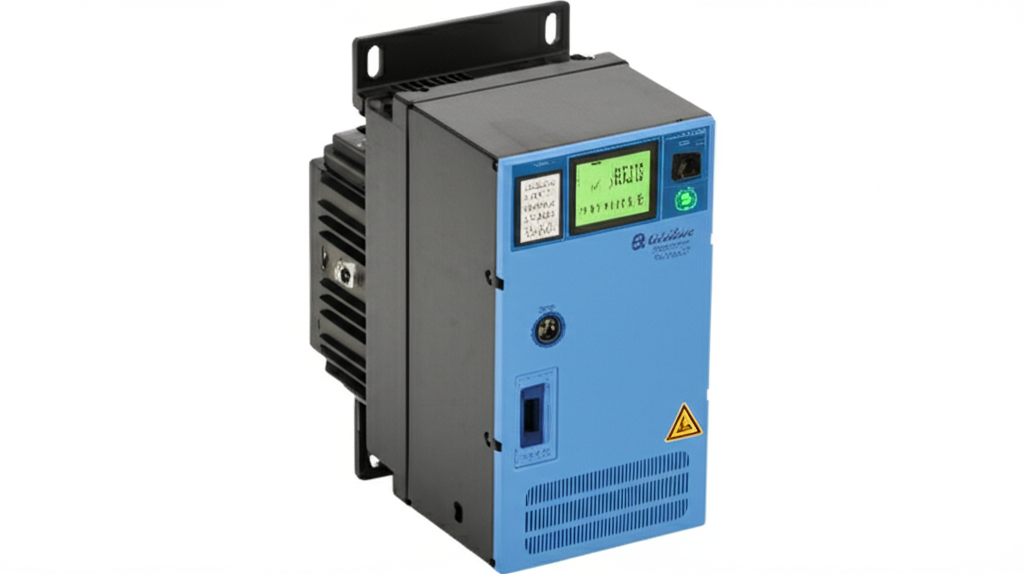
A motor soft starter is a clever piece of electronic equipment that solves the “brute force” starting problem. Instead of hitting the motor with full power all at once, a soft starter gently ramps up the voltage.
Think of it like this:
- A regular starter (DOL or Direct-On-Line) is like flipping a light switch. You get instant, full power. It’s abrupt and harsh.
- A soft starter is like a dimmer switch. You can slowly turn the knob to bring the light up to full brightness smoothly.
This smooth motor acceleration is the key. By controlling the voltage, the soft starter limits the initial rush of current and the sudden jolt of torque. The motor gets up to speed gradually and gracefully, which is much kinder to both the motor and the machinery it powers. It’s an essential motor control device for modern industry.
How Does a Motor Soft Starter Work Its Magic?
So, how does this device actually control the power? The secret lies inside its electronic brain. A soft starter uses solid-state devices called Silicon-Controlled Rectifiers (SCRs), also known as thyristors.
Imagine the flow of electricity is like water in a pipe. A traditional switch is like a simple gate valve—it’s either fully open or fully closed. An SCR, however, is like a sophisticated, computer-controlled valve. It can open just a little bit at first, then gradually open wider and wider until it’s fully open.
Here’s a simple breakdown of the process:
The internal components, like the high-quality motor core laminations inside the motor itself, are protected from the electrical and mechanical stress of a harsh start.
What Are the Biggest Benefits of Using a Motor Soft Starter?
Okay, so we know they provide a smoother start. But what does that really mean for you and your equipment? The advantages are significant.
- Massive Reduction in Mechanical Stress: This is the big one. By eliminating the sudden jolt at startup, you drastically reduce wear and tear on everything connected to the motor. This includes gearboxes, chains, belts, couplings, and even the product on a conveyor belt. The result? Extended equipment life and a lot less money spent on maintenance and replacement parts.
- Electrical System Protection: The high inrush current from a direct-on-line start can trip circuit breakers, blow fuses, and cause voltage sags that affect other sensitive equipment on the same power line. A soft starter keeps the starting current under control, typically limiting it to 2-4 times the motor’s normal running current instead of 6-8 times. This leads to much better electrical system stability.
- Increased Motor Lifespan: An electric motor is a tough piece of machinery, but it’s not invincible. The thermal and mechanical stress of repeated hard starts can damage the motor windings and bearings over time. By providing a gentle start, a soft starter helps the motor last longer and run more reliably. It protects the core components, including the crucial stator core lamination, from premature failure.
- Reduced Operating Costs: While the direct energy savings during operation are minimal (especially if it has a bypass contactor), the indirect savings are huge. Fewer breakdowns mean less downtime and lost production. Lower peak demand can also reduce electricity bills in facilities with demand-based pricing. It’s a smart investment with a solid return on investment.
Where Are Soft Starters Commonly Used?
You’ll find soft starters in a wide range of industries and applications where smooth control is essential. They are a cornerstone of modern industrial automation and process control.
Here are some common examples:
- Pumps: In water and wastewater treatment plants, soft starters are critical for preventing “water hammer.” This is a damaging pressure surge that happens when a column of water is started or stopped abruptly. A soft stop feature is especially valuable here.
- Fans and Blowers: Large fans in HVAC systems or industrial ventilation have high inertia. A soft starter allows them to get up to speed gently, protecting the fan blades and drive belts.
- Conveyors: Imagine a conveyor belt loaded with bottles. A sudden, jerky start can cause the bottles to fall over, leading to breakage and costly clean-up. A conveyor soft start ensures a smooth takeoff.
- Compressors and Chillers: These machines often have high-inertia loads. A soft starter manages the high torque required to get them started without overloading the electrical system.
- Other Machinery: You’ll also see them on crushers, grinders, centrifuges, and mixers—any application where a sudden start would be inefficient, damaging, or unsafe. The versatility of a soft starter is a key reason for its widespread motor application.
Soft Starter vs. VFD vs. Direct On-Line (DOL) Starter: What’s the Difference?
When choosing a motor control method, it’s easy to get confused between a soft starter, a Variable Frequency Drive (VFD), and a standard Direct-On-Line (DOL) starter. They all start motors, but they do it in very different ways.
| Feature | Direct On-Line (DOL) Starter | Soft Starter | Variable Frequency Drive (VFD) |
|---|---|---|---|
| Main Function | Simple On/Off switch | Controls acceleration and deceleration | Controls acceleration, deceleration, and speed |
| Starting Current | Very High (6-8x normal) | Reduced (2-4x normal) | Low (can be limited to normal current) |
| Mechanical Stress | High (sudden jerk) | Low (smooth, gradual start) | Very Low (fully controlled start) |
| Speed Control | None | No | Yes, full-range speed control |
| Energy Savings | None | Minimal (mainly by reducing peak demand) | Significant (especially at reduced speeds) |
| Cost | Low | Medium | High |
| Complexity | Very Simple | Moderate | Complex |
When to choose each one:
- DOL Starter: Best for small motors where the starting jolt and high current aren’t a concern. It’s the cheapest and simplest option.
- Soft Starter: The perfect choice when your main goal is to reduce mechanical stress and limit inrush current during startup and shutdown. If you don’t need to change the motor’s speed while it’s running, a soft starter is a very cost-effective solution.
- Variable Frequency Drive (VFD): Choose a VFD when you need to control the motor’s speed throughout its operation. VFDs are ideal for applications requiring precise process control (like adjusting a fan’s airflow or a pump’s flow rate) and offer the greatest potential for energy savings.
How Do I Choose the Right Soft Starter?
Selecting the right soft starter isn’t just about matching the motor’s horsepower. You need to consider a few key factors to ensure reliable performance.
When in doubt, it’s always best to consult with an expert or the manufacturer, like Siemens, ABB, or Rockwell Automation, to ensure you get the perfect fit for your needs.
The Future of Motor Control is Smart and Smooth
The humble electric motor powers our world, but starting it doesn’t have to be a brute-force event. Motor soft starters represent a huge leap forward from old-school direct-on-line starting. They provide a simple, cost-effective solution to the universal problems of mechanical shock and electrical surges.
By giving your motors a gentle, controlled start, you’re not just being kind to your equipment. You’re making a smart investment that pays off in longer equipment life, reduced maintenance costs, improved system reliability, and a more stable power grid. From simple pumps to complex industrial machinery, the smooth acceleration provided by a soft starter is the key to a more efficient and durable operation.
Frequently Asked Questions (FAQ)
Q: Does a soft starter save energy?
A: A soft starter’s primary role isn’t energy saving during operation, especially if it has a bypass contactor. Its main savings come from reducing peak demand charges on your electricity bill and by preventing costly downtime and repairs. For significant energy savings on variable-load applications, a VFD is the better choice.
Q: Can I use a soft starter for speed control?
A: No. A soft starter is only designed to control the motor’s voltage during its startup and shutdown phases. Once the motor is at full speed, the soft starter is typically bypassed, and the motor runs directly from the line voltage and frequency. For continuous speed control, you need a Variable Frequency Drive (VFD).
Q: Is a soft starter difficult to install?
A: For a qualified electrician, installing a soft starter is generally straightforward. A basic soft starter wiring diagram shows it is installed in series between the motor’s contactor (or circuit breaker) and the motor itself. However, programming the ramp times and protection settings correctly is crucial for optimal performance.
Q: What is a bypass contactor?
A: A bypass contactor is a device inside or alongside a soft starter. Once the motor is up to full speed, this contactor closes, creating a direct path for electricity to the motor and “bypassing” the soft starter’s electronics. This improves efficiency and reduces heat generation, which prolongs the life of the soft starter itself.
Key Takeaways
- Problem: Starting a motor directly creates a huge electrical surge (inrush current) and a violent mechanical jolt.
- Solution: A motor soft starter gently ramps up the voltage to the motor for a smooth, controlled acceleration.
- How it Works: It uses electronic components called SCRs (thyristors) to act like a dimmer switch for the motor’s power.
- Key Benefits: Reduces mechanical wear and tear, prevents electrical system disturbances, and extends the lifespan of motors and machinery.
- Common Uses: Ideal for pumps, fans, conveyors, compressors, and other equipment where a smooth start is critical.
- Soft Starter vs. VFD: Use a soft starter for smooth start/stop control. Use a VFD when you need to control the motor’s speed during operation.