What is a Short Motor? Your Complete Guide to Engine Short Blocks
Meta Description: Discover what a short motor is, its components, how it differs from a long block, and when it’s the right choice for engine replacement or repair.
What is a Short Motor? Understanding the Engine’s Core
Every mechanic, performance enthusiast, and vehicle owner facing a major repair eventually confronts a critical question: how do you fix a fundamentally broken engine? You might hear terms thrown around like “crate engine,” “long block,” and the one that often causes the most confusion—”short motor.” If you’ve ever found yourself trying to decipher a repair quote or plan a project build, wondering what a short motor includes and if it’s the right solution for you, you’re in exactly the right place.
Understanding this term is more than just learning automotive jargon; it’s about unlocking a powerful, cost-effective repair strategy that can save you thousands. A short motor, also known as a short block, represents the very heart of your vehicle’s internal combustion engine. Getting this choice right means the difference between a successful, reliable repair and a costly, frustrating ordeal.
This guide will demystify the short motor completely. We’ll break down what it is, what parts it contains, and how it stacks up against other engine replacement options. By the end, you’ll be empowered to have a confident conversation with your mechanic and make the best financial and mechanical decision for your vehicle.
What We’ll Cover
- Defining the “Short Motor”: A clear, simple explanation of this core engine assembly.
- Key Components of a Short Motor: A look inside at the essential parts that make up a short block.
- Short Motor vs. Long Motor vs. Bare Engine: Clarifying the differences between your main engine replacement options.
- When to Choose a Short Motor?: Exploring the specific scenarios where a short motor is the ideal solution.
- Advantages and Disadvantages: A balanced look at the pros and cons to help you weigh your options.
- What to Consider When Buying a Short Motor: Essential tips for sourcing a quality new, used, or remanufactured unit.
- The Installation Process: A brief overview of what it takes to get a short motor into your vehicle.
- Conclusion: Making an Informed Decision: Your engineering takeaway to guide your next steps.
Defining the “Short Motor”
So, what exactly is a short motor?
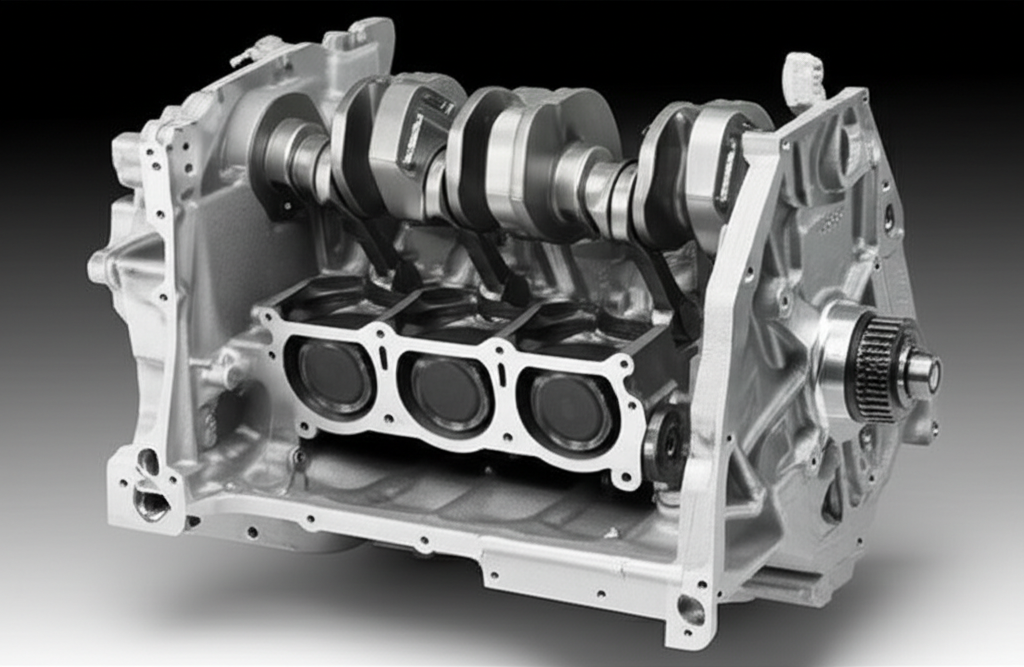
In the simplest terms, a short motor (or short block) is the bottom half of your engine, fully assembled. Think of your engine as a two-story house. The short motor is the foundation and the first floor—the core structure that contains all the primary rotating and reciprocating parts. The “top end,” which includes the cylinder head and valve train, is the second story and the roof.
A short motor is essentially a pre-assembled engine sub-assembly that includes the engine block itself, with the crankshaft, pistons, and connecting rods already installed. It forms the mechanical foundation upon which the rest of the engine is built.
Crucially, it’s just as important to understand what a short motor doesn’t include. You won’t typically find these parts on a short motor:
- Cylinder Head(s): The entire top portion of the engine containing the valves, camshafts, and spark plugs is absent.
- Sump (Oil Pan): The pan at the very bottom that holds the engine oil is usually not included.
- Valve Train: Camshafts, rockers, lifters, and valves are all part of the cylinder head assembly.
- Timing Components: The timing belt, chain, gears, and tensioners are typically left off.
- Ancillaries: Absolutely none of the external components like the alternator, starter motor, water pump, power steering pump, or AC compressor are part of the package.
Buying a short motor means you’re getting the core, and you or your mechanic will be responsible for transferring over all the other necessary components from your old engine or sourcing them new.
Key Components of a Short Motor
To truly grasp what you’re getting, let’s take a look inside. A short motor isn’t just a random collection of parts; it’s a precisely assembled unit containing the components that handle the immense forces of combustion.
The Engine Block
This is the literal foundation of the engine. Made from cast iron or aluminum, the engine block is the main structural component that houses the cylinders where the pistons travel. It contains carefully machined passages for coolant to flow and oil to lubricate the moving parts. If your engine block is cracked or the cylinder walls are severely damaged (scored), a short motor is often the only viable fix.
Crankshaft
The crankshaft is the backbone of the rotating assembly. This incredibly strong, balanced shaft sits at the bottom of the engine block, supported by main bearings. Its job is to convert the violent up-and-down (reciprocating) motion of the pistons into the smooth rotational force needed to turn the flywheel and, ultimately, your vehicle’s wheels. Crankshaft damage, often caused by oil starvation, is a classic reason for a short motor replacement.
Pistons & Connecting Rods
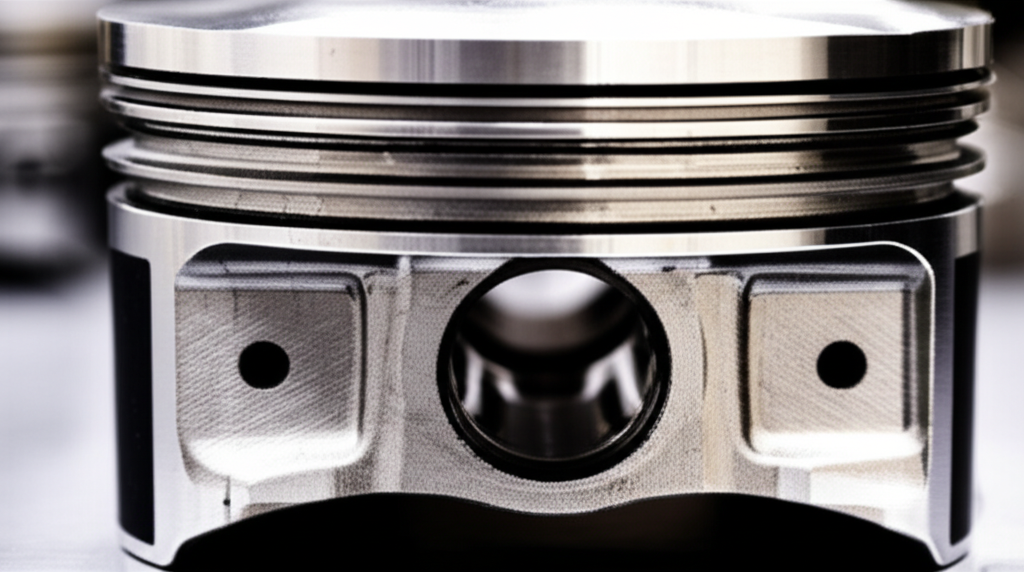
Pistons are the cylindrical plugs that move up and down inside the engine’s cylinders. They form a seal with the cylinder walls via piston rings and are responsible for compressing the air-fuel mixture and harnessing the power of its combustion. Each piston is attached to the crankshaft by a connecting rod. A “thrown rod”—where a connecting rod breaks and often punches a hole through the engine block—is one of the most catastrophic engine failures imaginable and a definite scenario for a short block replacement.
Main & Big End Bearings
These aren’t ball bearings but rather precision-machined, soft-metal shells that sit between the moving parts to provide a layer of lubrication.
- Main Bearings support the crankshaft as it rotates within the engine block.
- Big End Bearings are located where the connecting rods attach to the crankshaft.
When you hear a deep, rhythmic “knocking” sound from your engine, it’s often a sign of a “spun bearing.” This means a bearing has failed, creating metal-on-metal contact that quickly destroys the crankshaft and connecting rods. This type of “bottom-end knock” is a primary driver for choosing a short motor.
Short Motor vs. Long Motor vs. Bare Engine: What’s the Difference?
The automotive world loves its jargon, and it’s easy to get lost in the terminology. Understanding the hierarchy of engine assemblies is key to making a smart purchase.
- Short Motor (Short Block): As we’ve covered, this is the basic bottom-end assembly: block, crank, pistons, rods. It’s the starting point.
- Long Motor (Long Block): This is the next step up. A long motor includes everything in the short motor plus the cylinder head(s), camshaft(s), and complete valve train, all pre-assembled. It essentially gives you a complete engine core from the oil pan gasket surface up to the valve cover(s). You still need to transfer your intake and exhaust manifolds, fuel system, and all external ancillaries.
- Bare Engine: This term is often used interchangeably with “long motor,” but it can sometimes imply the inclusion of a sump/oil pan and timing covers. Always clarify with the supplier exactly what’s included.
- Complete / Crate Engine: This is the “all-in-one” solution. A complete engine, often called a crate engine, is typically a fully “dressed” unit. It comes with the intake manifold, fuel injectors, water pump, valve covers, oil pan, and sometimes even the alternator and other accessories already installed. It’s designed to be a “drop-in” replacement, requiring the least amount of component transfer and labor.
The choice between them comes down to a simple diagnosis: what part of your engine has failed? If your cylinder head is warped but the bottom end is perfect, you might just replace the head. But if you’ve spun a bearing and destroyed the crankshaft, yet your cylinder head is in perfect shape, a short motor is the most logical and economical choice.
When to Choose a Short Motor? Common Scenarios
Opting for a short motor isn’t just about the parts; it’s a strategic decision based on the type of engine failure you’re facing. Here are the most common situations where a short motor shines.
Scenario 1: Catastrophic Bottom-End Failure
This is the number one reason to buy a short motor. A severe “rod knock,” a spun main bearing, a broken connecting rod, or a cracked engine block are all death sentences for the engine’s bottom end.
- Case Study: The Honda Civic with a Bottom-End Knock: Imagine a 2012 Honda Civic develops a loud, rhythmic knocking sound that gets faster with engine RPM. A mechanic diagnoses it as a spun main bearing, which has also damaged the crankshaft beyond simple repair. However, the cylinder head is inspected and found to be perfectly flat and in great condition. Instead of buying a complete used engine with an unknown history, the owner opts for a remanufactured short motor for around $2,000. A comparable long block would have been closer to $3,500. By reusing the perfectly good cylinder head, the owner saves over a thousand dollars on parts.
Scenario 2: You Have a Salvageable (and Valuable) Cylinder Head
Modern cylinder heads, especially on dual-overhead-cam (DOHC) or high-performance engines, are complex and expensive components. If your bottom end fails due to oil starvation but the head wasn’t damaged by overheating, reusing it with a new short motor is a fantastic way to control costs. Why pay for a new cylinder head assembly if your old one is perfectly fine?
Scenario 3: Cost-Effectiveness is Key
When you break it down, the math often favors a short motor for specific failures. As a general rule, a remanufactured short motor can be 20-40% cheaper than its long motor equivalent and potentially 40-60% cheaper than a complete crate engine. While you’ll pay more in labor to have a mechanic transfer the parts, the initial savings on the core component can make a major repair financially feasible.
Scenario 4: Custom and Performance Builds
For automotive enthusiasts, a short motor is the perfect foundation. They can buy a robust short block, often with forged pistons and stronger connecting rods, and then build the rest of the engine to their exact specifications.
- Performance Build Foundation: A Subaru WRX owner wants to build a 400-horsepower engine. Instead of risking the stock components, they start with a performance-spec short motor built to handle higher boost pressure. This gives them a bulletproof bottom end. They are then free to choose their own custom cylinder heads, high-lift camshafts, and a larger turbocharger to meet their power goals. This modular approach is central to the performance tuning world. The fundamental motor application dictates the required strength of its core components, whether for a daily driver or a race car.
Advantages and Disadvantages of Opting for a Short Motor
Like any major repair decision, choosing a short motor involves trade-offs. It’s crucial to weigh the pros and cons before committing.
Advantages:
- Lower Initial Part Cost: This is the biggest draw. You’re not paying for components you don’t need, which can lead to significant upfront savings.
- Reuse of Good Components: You get to keep and reuse your known-good cylinder head, manifolds, and accessories, which you’ve already paid for and maintained.
- Targeted Repair: It directly addresses bottom-end failures without replacing the entire engine assembly.
- Quicker Than a Full Rebuild: It’s much faster for a shop to install a pre-assembled short motor than to completely tear down, machine, and rebuild your old engine block from scratch.
Disadvantages:
- Higher Labor Costs: The main drawback. A mechanic has to carefully remove, inspect, clean, and transfer the cylinder head, oil pan, timing components, and all ancillaries. This process can take anywhere from 15 to 30 hours, depending on the engine’s complexity. These labor costs can eat into the initial parts savings.
- Risk from Transferred Components: If your original engine failure was caused by overheating that warped the cylinder head, transferring that damaged head to a new short block will cause the new engine to fail immediately. Thorough inspection of all reused parts is absolutely critical.
- Increased Complexity: For a DIY mechanic, swapping a short motor is a much more involved job than a complete engine swap. It requires specialized tools for timing the engine and properly torquing the cylinder head bolts.
- Potential for Mismatched Parts: There’s always a slight risk of compatibility issues if the wrong gasket set is used or if there were mid-year production changes to the engine model.
What to Consider When Buying a Short Motor
You’ve decided a short motor is the right path. Now what? Sourcing the right one is critical for a successful repair.
- Engine Compatibility: This is non-negotiable. You must match the engine code, not just the make, model, and year of your vehicle. The engine code is usually stamped on the block or found on a sticker in the engine bay or door jamb.
- New, Remanufactured, or Used:
- New: Typically sourced from the original equipment manufacturer (OEM) like Ford or Toyota. It offers the best quality and warranty but comes at the highest price.
- Remanufactured (“Recon”): This is often the sweet spot. A remanufactured short motor has been completely disassembled, cleaned, inspected, and rebuilt to OEM specifications with new bearings, rings, and other wear parts. Reputable suppliers often achieve a 95%+ success rate for long-term reliability.
- Used: Sourced from a salvage vehicle. This is the cheapest and riskiest option. It may have high mileage or an unknown history, and warranties are often very short or non-existent.
- Supplier Reputation: Buy from a reputable engine reconditioner or parts supplier with a proven track record. Check reviews and ask other mechanics for recommendations.
- Warranty: A good remanufactured short motor should come with a solid warranty. Look for at least 1-3 years and 12,000-36,000 miles. This provides peace of mind that the assembly is free from defects.
- Core Charge: Almost all remanufactured engine suppliers will add a “core charge” to your bill. This is a deposit, typically a few hundred dollars, that you get back when you return your old, failed engine block (the “core”). It ensures they have a steady supply of blocks to rebuild.
The Installation Process (Brief Overview)
Installing a short motor is a job for an experienced mechanic. It’s a complex process that leaves no room for error. The general steps include:
Conclusion: Making an Informed Decision
A short motor is far more than just a collection of engine parts; it’s a precise, strategic solution to a very specific and serious problem. It offers a powerful middle ground between a minor repair and a full, costly engine replacement.
Here’s your engineering takeaway:
- A short motor is the ideal choice for catastrophic bottom-end failure when your cylinder head and other components are confirmed to be in good working order.
- It can offer significant cost savings on parts, but be mindful that these can be offset by higher labor requirements.
- The quality of the remanufacturing process and the warranty are paramount. Don’t choose a supplier based on price alone.
- This is not a beginner’s DIY project. The success of the repair hinges on the meticulous inspection and correct assembly of dozens of components.
Ultimately, the first and most important step is a correct diagnosis. Before you even start shopping for parts, have a qualified and trustworthy mechanic thoroughly inspect your engine to pinpoint the exact cause of failure. By understanding what a short motor offers, you can work with your mechanic as an informed partner to decide if this clever, cost-effective solution is the right way to bring your vehicle’s heart back to life.