What is an Inboard Outboard (I/O) Motor? Your Complete Guide to Stern Drive Propulsion
Of course. Here is the comprehensive, long-form article written from a first-person perspective, adhering to all your instructions.
Table of Contents
- The Hybrid Design Explained
- Key Components of an I/O System
- Power Transfer
- Steering and Trim
- Cooling and Exhaust Systems
- I/O vs. Outboard Motors
- I/O vs. Traditional Inboard Motors (Shaft Drive)
- Performance & Efficiency
- Aesthetics & Space
- Handling & Control
- Versatility
- Maintenance Complexity & Cost
- Corrosion Risk
- Vulnerability to Underwater Objects
- Winterization
- Engine Access
- Bowriders & Runabouts
- Cruisers & Sport Boats
- Deck Boats
- Regular Inspections
- Annual Service
- Proper Winterization
- Saltwater Care
- Bellows Replacement
1. Introduction: Unveiling the Inboard Outboard Motor
If you’ve spent any time around boats, you’ve probably heard a bunch of terms thrown around: inboard, outboard, stern drive, I/O. It can get confusing fast. I remember when I was first getting into boating, the differences felt like a foreign language. But after years of owning, operating, and tinkering with different boats, I’ve come to really appreciate the unique design of the inboard outboard motor, often called a “stern drive.”
So, why does this matter to you? Because choosing the right propulsion system is one of the biggest decisions you’ll make as a boat owner. The I/O motor sits in a sweet spot, combining the power of an inboard engine with the versatile steering of an outboard. It’s the engine of choice for a huge number of family-friendly runabouts, cruisers, and sport boats.
In this guide, I’m going to walk you through everything I’ve learned about inboard outboard motors. We’ll break down what they are, how they work, and how they stack up against the competition. My goal is to give you a clear, honest picture so you can figure out if an I/O is the right fit for your boating adventures.
2. What Exactly is an Inboard Outboard Motor? A Clear Definition
Let’s get right to it. An inboard outboard motor is exactly what it sounds like: a hybrid. It takes elements from both inboard and outboard designs and merges them into one clever package.
2.1 The Hybrid Design Explained
Here’s the simplest way I can explain it:
- The “Inboard” Part: The engine itself—a powerful, often car-style engine block—sits inside the boat’s hull, usually in an engine compartment at the stern (the back). This keeps the weight low and centered, which is great for stability, and it helps muffle the noise.
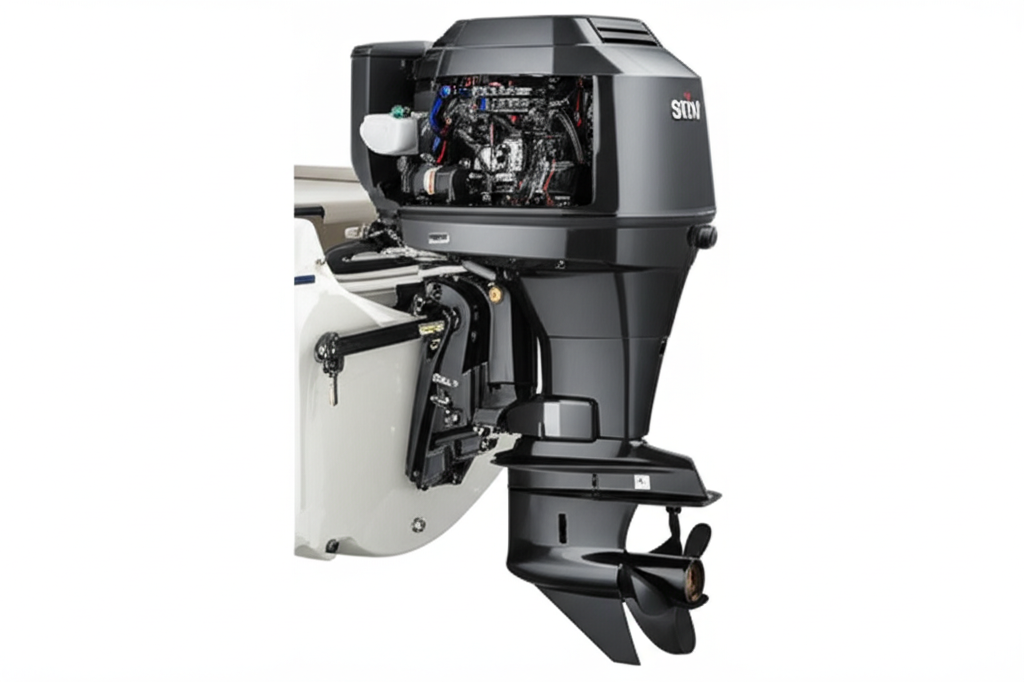
- The “Outboard” Part: The drive unit, which contains the gears and propeller, is mounted outside the hull. It pokes through a hole in the transom (the flat back wall of the boat). This external part, called the “outdrive” or “stern drive,” looks a lot like the lower half of an outboard motor.
So, when you hear people say Stern Drive, I/O, or Sterndrive, they’re all talking about this same hybrid system. It’s a design that tries to give you the best of both worlds.
2.2 Key Components of an I/O System
To really get it, you need to know the three main players in this system:
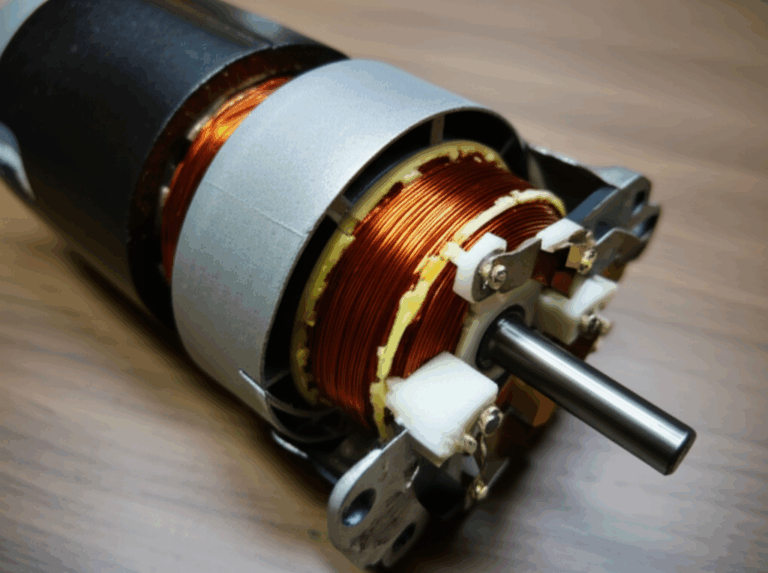
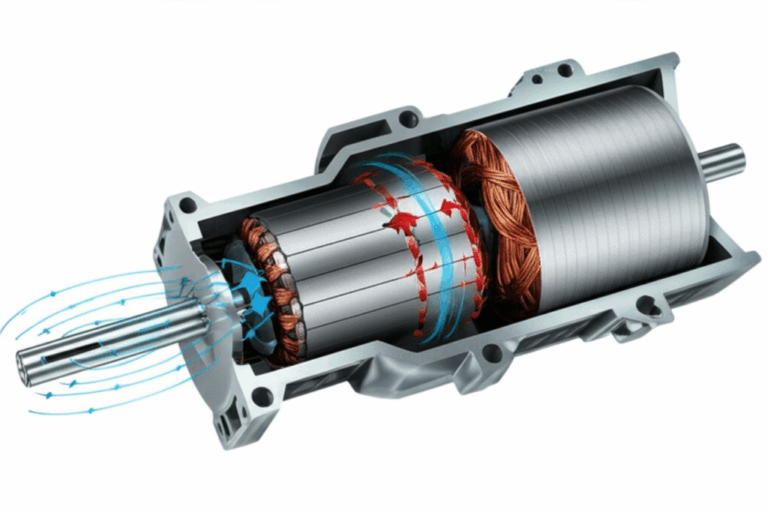
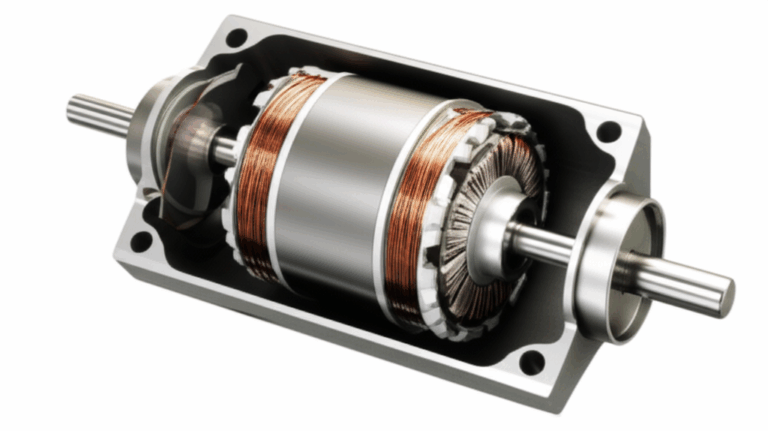
- The Engine Block: This is the heart of the operation. Most of the time, it’s a four-stroke gasoline engine that’s been “marinized,” meaning it’s been adapted for use on the water. Major players like MerCruiser and Volvo Penta often base their engines on proven automotive blocks. This power plant is the foundation of the entire system. At its core, the interaction between magnetic fields and electrical currents inside is what makes everything go, and the fundamental motor principle remains the same whether it’s in a car or a boat.
- The Transom Assembly: This is the crucial link. It’s a heavy-duty assembly that mounts to the transom, creating a waterproof seal. The engine inside connects to this assembly, and the outdrive outside also connects to it. It contains the gimbal bearing, which allows the outdrive to pivot up, down, and side-to-side for trimming and steering.
- The Outdrive: This is the part you see in the water. It houses the transmission gears, the vertical driveshaft, and the propeller. This entire unit articulates, meaning it moves to steer the boat. It’s also the part that can be trimmed up or down to change the boat’s running angle in the water.
3. How an Inboard Outboard Motor Works: The Mechanics of Propulsion
Okay, so we know the parts. But how do they work together to push your boat across the water? It’s a pretty ingenious bit of engineering.
3.1 Power Transfer
It all starts with the engine inside the hull. The engine’s power is transferred through a driveshaft that goes through the transom assembly. This is where it gets interesting. Inside that assembly are U-joints, just like in a car’s driveshaft, which allow the power to be transmitted to the outdrive even as it pivots and trims. From there, the power travels down a vertical shaft in the outdrive to a set of gears that spin the propeller. It’s a direct and efficient way to get the engine’s grunt to the water.
3.2 Steering and Trim
This is where the I/O really shines and feels like an outboard. When you turn the steering wheel, a hydraulic or cable system physically pivots the entire outdrive left or right. This directs the propeller’s thrust, turning the boat with surprising agility. There’s no separate rudder like you’d find on a traditional inboard.
Additionally, you have a “trim and tilt” function. Trim allows you to make small adjustments to the outdrive’s angle while you’re underway. Trimming “in” (tucking the drive under the boat) helps you get on plane faster. Trimming “out” (angling it away from the boat) lifts the bow for better speed and efficiency once you’re cruising. Tilt is for making big movements, like lifting the drive all the way up for trailering or beaching in shallow water.
3.3 Cooling and Exhaust Systems
Keeping the engine cool is critical. Most I/Os use a “raw water cooling” system. A water pump impeller inside the outdrive sucks up lake or seawater and pumps it through the engine block and exhaust manifolds to absorb heat before spitting it out with the exhaust. Some higher-end models offer a “closed cooling system,” which is more like a car’s radiator system. It uses an internal coolant loop and a heat exchanger to cool the engine, which is much better for preventing internal corrosion, especially in saltwater.
The exhaust is typically routed from the engine through the transom and expelled through the center of the propeller hub. This is why you don’t usually see an exhaust port on the side of an I/O-powered boat; it’s all happening underwater, which helps to make the ride quieter.
4. Inboard Outboard vs. Other Marine Engines: A Comparative Look
Understanding an I/O is great, but its real value becomes clear when you compare it to the alternatives. This is where you start to see the trade-offs.
4.1 I/O vs. Outboard Motors
This is the classic showdown, especially for boats under 30 feet. I’ve owned both, and they each have their moments to shine.
- Transom Space: This is the I/O’s biggest visual win. With the engine hidden away, you get a wide-open, clean transom. This is perfect for a big, luxurious swim platform, which is amazing for swimming, lounging, or getting water sports gear on. An outboard, by definition, hangs off the back, taking up all that prime real estate.
- Weight Distribution: An I/O’s engine weight is low and inside the hull, which can contribute to a more stable, planted feel in the water. An outboard hangs all its weight off the very back, which can affect handling on some hull designs.
- Noise & Vibration: I’ve found that my I/O boats have generally been quieter at cruising speed. The engine is inside a sound-dampened compartment, so you get more of a low rumble than the direct whine of an outboard engine sitting right behind you.
- Shallow Water & Trailering: The outboard wins this one, hands down. You can tilt an outboard completely out of the water. An I/O’s outdrive can only tilt up so far before the top of it hits the swim platform. This means the outdrive is always more exposed to underwater hazards in shallow spots.
- Maintenance: Outboards are generally simpler. Everything is in one self-contained unit that’s easy to access. I/Os have more moving parts exposed to the water, like the U-joint bellows and shift cable bellows. These rubber boots are critical—if they tear, water can get into the boat and destroy expensive parts like the gimbal bearing.
4.2 I/O vs. Traditional Inboard Motors (Shaft Drive)
This comparison is more common in larger cruisers and dedicated watersports boats (like wakeboard boats).
- Maneuverability: The I/O is far more nimble. Its ability to direct propeller thrust makes steering at low speeds, like when docking, much more intuitive. A traditional inboard has a fixed propeller at the end of a shaft under the boat and relies on a separate rudder for steering. It’s like trying to steer a shopping cart from the back—it can be a real bear to handle in tight quarters until you get the hang of it.
- Draft: An I/O can trim up to reduce its draft (how much of it is underwater), allowing you to sneak into slightly shallower areas. A traditional inboard has a fixed draft determined by its prop and rudder, which can’t be changed.
- Propeller Protection: The inboard wins on protection. Its prop and running gear are tucked up under the hull, making them much less likely to hit a log or a sandbar. The I/O’s outdrive and propeller are the first things to make contact with anything you’re about to run over. This is a common and often frustrating motor problem for boaters who frequent shallow or debris-filled waters.
5. Advantages of Inboard Outboard Motors
So, after all that, why would you choose an I/O? In my experience, it comes down to a few key benefits.
5.1 Performance & Efficiency
I/Os offer a fantastic balance of power and fuel economy. Because they often use larger displacement, car-style engines, they produce excellent torque, which is great for getting on plane quickly and for pulling skiers or wakeboarders. They are very efficient at cruising speeds, often rivaling modern four-stroke outboards.
5.2 Aesthetics & Space
You just can’t beat that swim platform. For family boating, having a huge, unobstructed area at the back of the boat for swimming and relaxing is a game-changer. It makes the boat feel bigger and more luxurious. The clean lines of the stern are a major reason why I/Os dominate the market for boats like bowriders and pocket cruisers.
5.3 Handling & Control
The combination of power steering and the articulating drive unit gives I/O boats a very familiar, car-like feel at the helm. They are responsive, easy to handle, and the ability to trim the drive gives you a level of control over the boat’s ride attitude that you just don’t get with a traditional inboard.
5.4 Versatility
This is the I/O’s superpower. It’s a true jack-of-all-trades. It has enough power for serious water sports, it’s efficient and comfortable enough for all-day cruising, and it provides the space and layout that families love. The wide range of a specific motor application makes it a popular choice for many boat manufacturers.
6. Disadvantages & Considerations for I/O Motors
It’s not all sunshine and swim platforms. I’ve learned firsthand that owning an I/O comes with a unique set of responsibilities.
6.1 Maintenance Complexity & Cost
This is probably the biggest drawback. There are more components to worry about than with an outboard. Those rubber bellows I mentioned have a finite lifespan and must be replaced every few years. It’s a non-negotiable preventative task. Annual maintenance costs tend to be higher, averaging anywhere from $500 to over $1,500, depending on what needs to be done.
6.2 Corrosion Risk
The outdrive lives in the water, and if you boat in saltwater, it’s under constant attack. While manufacturers like Volvo Penta and MerCruiser have made huge strides with advanced alloys and corrosion-resistant coatings, you have to be diligent. Flushing the engine with freshwater after every saltwater run is crucial, and you must regularly inspect and replace your sacrificial zinc anodes, which are designed to corrode instead of your expensive drive.
6.3 Vulnerability to Underwater Objects
I can’t stress this enough: the outdrive is exposed. Hitting a submerged log, rock, or even a shallow sandbar can lead to a very expensive repair bill for a bent propeller, a damaged gearcase, or worse. You have to be much more aware of water depth than an outboard owner might be.
6.4 Winterization
If you live in a climate where it freezes, winterizing an I/O is more involved than with an outboard. You have to drain all the water from the engine block and exhaust manifolds to prevent it from freezing and cracking the block—a catastrophic failure. While you can learn to do it yourself, many owners (myself included, for a long time) prefer to pay a professional marine mechanic to ensure it’s done right.
6.5 Engine Access
Depending on the boat’s design, getting to the engine for routine checks can be a bit of a squeeze. On some boats, you have great access through a large engine hatch. On others, you might have to be a bit of a contortionist to reach the spark plugs or oil filter.
7. Common Types of Boats Using Inboard Outboard Motors
You’ll find I/O power on some of the most popular recreational boats on the water. The design just fits their mission perfectly.
7.1 Bowriders & Runabouts
These are the quintessential family day boats, typically from 18 to 26 feet. The I/O is a perfect match, providing great performance for tubing and skiing while leaving the transom open for a huge swim platform—the centerpiece of a fun day on the water. Brands like Sea Ray, Chaparral, and Cobalt have built their reputations on I/O-powered bowriders.
7.2 Cruisers & Sport Boats
For mid-size cruisers (25 to 35 feet), I/Os offer a great package. They can provide the horsepower needed to get these heavier boats on plane efficiently. Many larger sport cruisers even use twin I/O installations for impressive speed and handling.
7.3 Deck Boats
Deck boats are all about maximizing space for people and gear. Like bowriders, they benefit immensely from the open transom and swim platform that an I/O allows, creating a perfect social zone at the stern.
8. Key Maintenance Tips for Inboard Outboard Motors
If you take care of your I/O, it will take care of you. Here are the non-negotiable things I’ve learned to stay on top of:
- Regular Inspections: Every time you go out, give the outdrive a quick look. Check the bellows for cracks or signs of wear. Look at your zinc anodes. Before starting the engine, open the hatch and check your fluid levels and look for any leaks from belts and hoses.
- Annual Service: Don’t skip your annual service with a qualified marine mechanic. This includes changing the engine oil, the gearcase lube in the outdrive, and replacing the water pump impeller. A fresh impeller every year or two is cheap insurance against engine overheating.
- Proper Winterization: I mentioned it before, but it’s worth repeating. If it freezes where you live, proper winterization is the single most important thing you can do to protect your investment.
- Saltwater Care: If you’re a saltwater boater, flush the engine with freshwater for 5-10 minutes after every single trip. A thorough rinse of the entire outdrive with a good quality soap is also a must.
- Bellows Replacement: This is the I/O’s Achilles’ heel. Plan on replacing the U-joint and exhaust bellows every 5-7 years, regardless of how they look. A failure here can sink your boat or lead to thousands in repairs. It’s the ultimate preventative maintenance task.
9. Conclusion: Is an Inboard Outboard Motor Right for You?
So, there you have it. The inboard outboard motor is a brilliant, versatile piece of marine engineering that has defined family boating for decades. It offers a fantastic blend of inboard power and outboard maneuverability, all while providing the clean transom and spacious swim platform that so many boaters love.
However, that versatility comes with a commitment. You have to be prepared for a more involved maintenance schedule and be more cautious in shallow water.
An I/O might be perfect for you if:
- You prioritize a large, open swim platform for family fun.
- You enjoy the quiet, smooth ride of an inboard engine.
- You do most of your boating in deeper lakes or coastal waters.
- You plan to use your boat for a mix of cruising and watersports.
You might want to consider an outboard if:
- You frequently boat in very shallow or debris-filled water.
- You want the simplest possible maintenance and winterization.
- You need to tilt the engine completely out of the water for storage or beaching.
Ultimately, the choice comes down to how you plan to use your boat. By understanding the unique strengths and weaknesses of the I/O propulsion system, you’re now much better equipped to make a decision that will lead to years of happy, trouble-free days on the water.